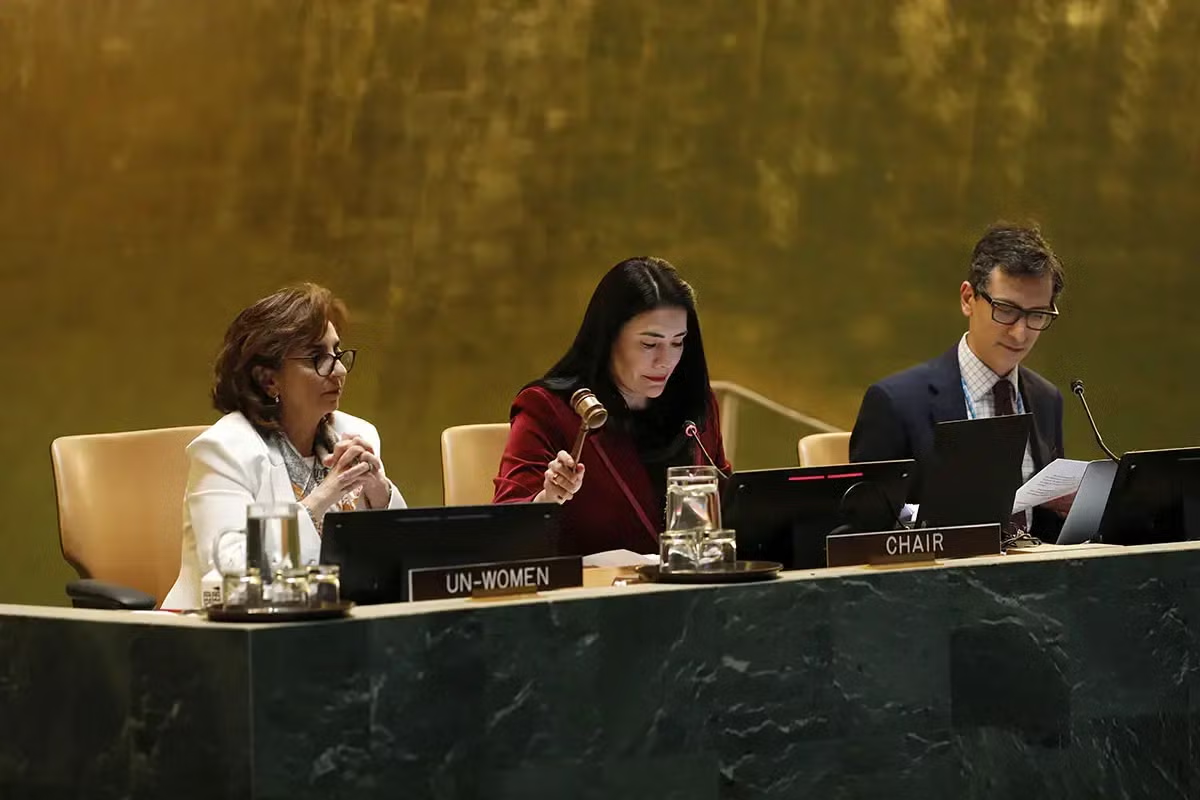
Governments agreed to strengthen access to justice for women and girls at the 70th Session of the Commission on the Status of Women (CSW70) at the UN.
The agreement, known as the Agreed Conclusions, was adopted by broad consensus and outlines global commitments to advance gender equality, strengthen legal protections, and ensure justice systems work fairly for women and girls.
United Nations leaders emphasised that access to justice is critical in protecting women from violence, discrimination, and abuse while strengthening trust in institutions.
Sima Bahous praised the agreement, saying it reflects a strong commitment by governments to end impunity and build justice systems that serve everyone equally.
Meanwhile, Maritza Chan Valverde reminded leaders that the real test lies in implementing the commitments, stressing that behind every statistic is a woman or girl waiting for change.
The agreement urges countries to review and repeal discriminatory laws, including those related to child marriage, family law, and property rights, while strengthening protections against violence against women and girls both online and offline. It also calls for expanded access to legal aid and legal empowerment programmes, recognition of community justice workers and paralegals within national legal systems, and the promotion of digital justice and responsible AI governance to improve access to legal services. Additionally, the agreement emphasises the need to establish survivor-centred justice systems, particularly in conflict and crisis settings.
Despite progress, a recent report presented to the UN shows that no country has yet achieved full legal equality between women and men, underscoring the need for continued reforms.
The session, running from 9–19 March, brings together governments, civil society organisations, and UN agencies to push for stronger policies, financing, and accountability mechanisms to advance gender equality worldwide.
Through the agreement, global leaders reaffirm that justice is a powerful tool for transforming the lives of women and girls and building more inclusive societies.
About the Author