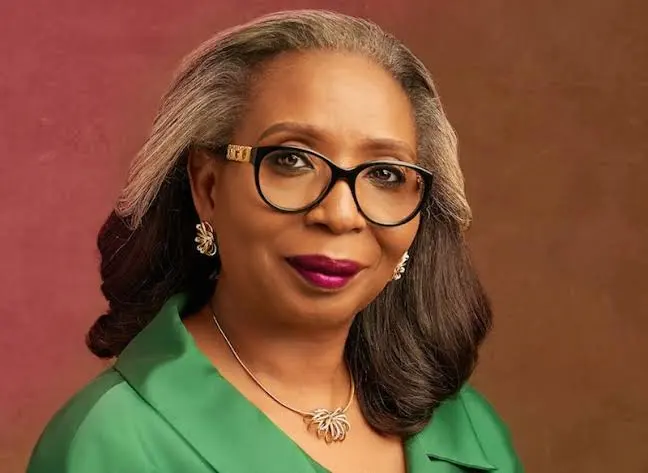
Ibukun Awosika is one of Africa’s most influential business leaders, celebrated for breaking barriers in corporate leadership, entrepreneurship, and women’s empowerment.
She made history as the first female Chairperson of First Bank of Nigeria, one of Nigeria’s oldest and most prestigious financial institutions.
Born on December 24, 1962, in Ibadan, she grew up in a family of seven children and developed a strong work ethic and leadership mindset from an early age. Her journey from a young entrepreneur in the furniture business to an internationally respected corporate leader has made her a role model for millions of African women.
Ibukun Awosika attended Methodist Girls’ High School in Yaba, Lagos, before joining Obafemi Awolowo University, formerly known as the University of Ife, where she earned a degree in Chemistry.
Although she initially dreamed of studying Architecture, she later diversified her interests by taking Accounting electives, a decision that helped shape her future in business. She also pursued executive education at institutions, including:
Lagos Business School
IESE Business School
Wharton School
China Europe International Business School
Her educational background helped strengthen her expertise in leadership, governance, and entrepreneurship.
Building a Business Empire
After completing her National Youth Service Corps (NYSC), Ibukun Awosika worked briefly at Deloitte, then known as Akintola Williams & Co., before joining a furniture company as a showroom manager.
In 1989, she founded Quebees Limited, a furniture manufacturing company driven by her vision to build a world-class African brand. The company later evolved into The Chair Centre Group, one of Nigeria’s leading furniture and security systems providers.
Her entrepreneurial success demonstrated that African-owned businesses could compete at international standards while remaining rooted in local markets.
Breaking Barriers at First Bank Nigeria
In 2015, Ibukun Awosika made history when she became the first female Chairperson of First Bank of Nigeria.
Her appointment was widely celebrated across Africa because it represented a breakthrough for women in corporate leadership and finance. During her tenure, she became known for promoting ethical leadership, innovation, governance reforms, and inclusive growth.
Her leadership also strengthened conversations around women occupying decision-making positions in Africa’s banking and business sectors.
Leadership Beyond Business
Ibukun Awosika’s influence extends beyond entrepreneurship. She serves or has served on multiple corporate and nonprofit boards across sectors such as:
Financial services
Manufacturing
Education
Technology
Energy
Corporate governance
She is also the founder of the Ibukun Awosika Leadership Academy and convener of the International Women’s Leadership Conference in Dubai.
Her commitment to mentorship and leadership development has inspired thousands of young entrepreneurs and professionals across Africa.
Media Presence and Public Influence
Ibukun Awosika has also built a strong media presence. In 2008, she appeared on the African version of Dragon’s Den, where she supported and mentored entrepreneurs.
She also hosts the television program Business His Way, which focuses on entrepreneurship, faith, leadership, and business success.
In 2020, she appeared in the Nigerian film Citation alongside Temi Otedola.
Awards and Recognition
Throughout her career, Ibukun Awosika has received numerous international recognitions, including:
Forbes Woman Africa Chairperson Award (2020)
International Women Entrepreneurial Challenge (IWEC) Award
International Friendship Award by the Queen of Spain
Recognition among Africa’s Most Influential Women by Avance Media
She is also a fellow of the African Leadership Initiative and the Aspen Global Leadership Network.
Lessons African Women Can Learn from Ibukun Awosika
1. Start with What You Have
Ibukun Awosika built her business from modest beginnings and transformed it into a respected African brand.
2. Leadership Has No Gender
Her rise to become the first female chairperson of First Bank Nigeria challenged long-standing stereotypes in corporate leadership.
3. Invest in Continuous Learning
Her pursuit of executive education and leadership development helped her remain competitive globally.
4. Build with Purpose
Beyond profits, her work focuses on mentorship, ethical leadership, and social impact.
5. African Women Can Lead Globally
Her career proves that African women can shape industries, influence policy, and compete on international platforms.
Ibukun Awosika continues to shape conversations around entrepreneurship, women’s leadership, governance, and African business excellence.
Her journey from a young furniture entrepreneur in Nigeria to one of Africa’s most respected corporate leaders remains a powerful example of resilience, vision, and transformative leadership for women across the continent.
About the Author