In Africa, thousands of people lose their lives every year due to delays in accessing blood and essential medical supplies. For many women experiencing childbirth complications, access to blood can mean the difference between life and death.
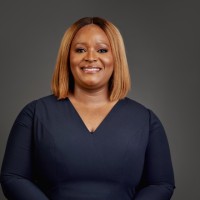
It is this challenge that inspired Temie Giwa-Tubosun to build LifeBank, one of Africa’s most innovative healthcare technology companies.
Through technology, logistics, and data-driven healthcare systems, Temie has transformed how blood and medical products are delivered in Nigeria and beyond, saving thousands of lives in the process.
Early Life, Education and Passion for Healthcare
Temie Giwa-Tubosun has long been passionate about improving healthcare systems, particularly for underserved communities and women.
She pursued studies in public administration, international management, health systems management, and health financing at Middlebury Institute of International Studies at Monterey.
Her academic work focused heavily on health systems strengthening, financing, monitoring and evaluation, and public health infrastructure in Africa. She also developed expertise in nonprofit management, strategic planning, and global health systems.
Before launching LifeBank, Temie worked with organisations including the World Health Organisation, the UK Department for International Development, the United Nations Development Programme, and the Lagos State Government.
These experiences helped her understand the deep structural gaps affecting healthcare delivery across Africa.
The Near-Death Experience That Changed Everything
Temie’s entrepreneurial journey became deeply personal in 2014 during the birth of her son.
While in the United States, she suffered severe bleeding during childbirth and required an emergency blood transfusion. Both she and her baby survived because blood was immediately available.
The experience forced her to reflect on what could have happened if she had been in Nigeria, where many hospitals struggle with blood shortages and poor distribution systems.
Nigeria has one of the highest maternal mortality rates globally, with postpartum haemorrhage being one of the leading causes of maternal deaths.
Temie realised that many women were dying not because treatment was impossible, but because blood could not reach hospitals quickly enough.
That moment became the foundation for what would later become LifeBank.
Building LifeBank

Before launching LifeBank, Temie founded the One Per cent Project in 2012, a nonprofit initiative aimed at increasing voluntary blood donations across Nigeria.
The project successfully mobilised thousands of blood donations and revealed the urgent need for a stronger blood distribution system.
In 2015, she transformed the initiative into LifeBank, a healthcare technology and logistics company designed to connect blood banks, hospitals, laboratories, and patients efficiently.
Officially launched in 2016, LifeBank uses technology, data systems, and a large logistics network to deliver blood and medical products to hospitals quickly and safely.
The company operates using motorcycles, boats, trucks, tricycles, and even drones to ensure emergency deliveries can reach healthcare facilities within minutes.
Through its platform, hospitals can locate available blood supplies and receive urgent deliveries day or night, allowing doctors to focus on patient care instead of searching for blood.
Under Temie’s leadership, LifeBank expanded beyond blood delivery to include oxygen, vaccines, medical consumables, and laboratory services.
The company also expanded operations into Kenya and other African markets.
During the COVID-19 pandemic, LifeBank adapted its logistics systems to support healthcare responses. The company launched HomeKits, a platform that enabled Nigerians to access COVID-19 PCR testing from home while reducing person-to-person contact.
LifeBank’s innovation demonstrated how African startups could respond quickly to public health emergencies using technology and local solutions.
Today, the company has helped save thousands of lives, especially mothers and children requiring emergency medical care.
Challenges Along the Journey
Building a healthcare logistics company in Africa came with significant challenges.
Temie had to navigate weak healthcare infrastructure, limited funding opportunities, transportation barriers, and regulatory complexities.
She also faced the challenge of convincing hospitals and institutions to adopt technology-driven healthcare systems in an environment where many processes were still manual.
As a female founder in the technology and healthcare sectors, she additionally had to overcome barriers often faced by women entrepreneurs seeking funding and leadership opportunities.
Despite these obstacles, Temie continued building partnerships with governments, healthcare institutions, donors, and investors to strengthen LifeBank’s operations.
Major Achievements and Recognition
Temie Giwa-Tubosun’s work has earned global recognition for innovation and social impact.
Some of her major achievements and awards include:
- Africa Business Heroes Award
- Global Citizen Prize for Business Leader
- Cisco Youth Leadership Award
- Recognition by the BBC as one of the women changing the world
- Recognition by the World Economic Forum as an African innovator
Her company, LifeBank, has also become one of Africa’s leading health-tech startups focused on emergency medical access and healthcare supply chains.
In addition, Temie completed executive education in Leadership for System Change at Harvard Kennedy School in 2025.
Lessons from Temie Giwa-Tubosun’s Journey
Temie’s story offers powerful lessons for African entrepreneurs and women leaders.
Her journey shows the importance of building solutions around real-life challenges affecting communities. Rather than accepting broken healthcare systems, she used innovation and technology to create practical solutions that save lives.
She also demonstrated that personal experiences can become powerful drivers for social impact and entrepreneurship.
Through LifeBank, Temie proved that African startups can combine profit, innovation, and humanitarian impact while building scalable businesses.
Her success further highlights the growing role of African women in technology, healthcare innovation, and systems leadership.
Changing Healthcare in Africa
Today, Temie Giwa-Tubosun is recognised as one of Africa’s leading health innovators.
Through LifeBank, she continues to strengthen healthcare delivery systems while helping reduce preventable deaths across Africa.
Her journey is a powerful example of how African women are using innovation, technology, and entrepreneurship to solve some of the continent’s most urgent challenges and create lasting impact.
About the Author