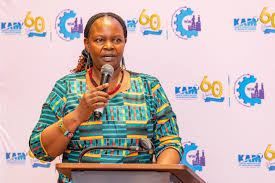
The Kenya Association of Manufacturers convened the 2026 Women in Manufacturing (WIM) Market Access Forum to expand growth opportunities for women in manufacturing.
The forum, themed “Unlocking Markets & Growth for Women in Manufacturing,” brought together policymakers, industry leaders, and entrepreneurs to address structural barriers limiting women’s full participation in the sector.
Held as part of ongoing efforts to strengthen inclusive industrial growth, the forum created a platform for dialogue, knowledge-sharing, and practical solutions aimed at enabling women-led manufacturing businesses to scale, compete, and access both local and international markets.
The forum drew participation from key regulatory and trade institutions, including the Kenya Export Promotion and Branding Agency, the Kenya Bureau of Standards (KEBS), and the Kenya Revenue Authority, alongside private-sector leaders and manufacturers.
Among the notable voices was Flora Mutahi, founder of the Women in Manufacturing (WIM) program, whose leadership has been instrumental in advocating for increased participation of women in industrial value chains.
Discussions at the forum centred on the persistent, real-world barriers that continue to affect women-led enterprises, particularly small and medium-sized manufacturers.
A major concern was market access, with participants highlighting the difficulties women entrepreneurs face in securing shelf space in retail outlets and entry into large distribution networks. Strict supplier requirements, including consistent supply capacity and standardised packaging, were noted as key factors that often exclude smaller producers.
Another significant challenge discussed was product standardisation and certification. Compliance with requirements set by the Kenya Bureau of Standards remains essential for market entry and quality assurance, yet many emerging businesses struggle with the cost and complexity of the certification process.
Taxation and regulatory awareness also featured prominently, with the Kenya Revenue Authority emphasising the importance of tax literacy. It was noted that many SMEs miss out on available incentives due to a limited understanding of compliance frameworks and regulatory obligations.
In addition, the Kenya Export Promotion and Branding Agency outlined opportunities for women manufacturers to access regional and international markets through export readiness programs and branding support, positioning SMEs for broader market expansion.
Talent and skills development emerged as another critical issue, with industry leaders pointing to a shortage of skilled labour. They called for stronger collaboration between training institutions and manufacturers to build a workforce aligned with the evolving needs of the sector.
Overall, the forum underscored the need to move beyond participation and deliberately position women as key drivers of industrial growth. Stakeholders emphasised that inclusive value chains are essential for building a resilient, competitive, and sustainable manufacturing sector in Kenya.
KAM reiterated its commitment to:
- Supporting women-led enterprises through the WIM program
- Advocating for policy reforms that lower entry barriers
- Facilitating access to finance, markets, and technical support
- Strengthening linkages between women manufacturers and large-scale buyers
Beyond discussions, the forum catalysed actionable outcomes. By bringing together regulators, industry players, and entrepreneurs, it created a coordinated approach to solving systemic challenges.
The presence of both public and private sector stakeholders underscored a shared recognition: unlocking the potential of women in manufacturing is not just a gender issue, it is an economic imperative.
The 2026 WIM Market Access Forum signals a growing shift toward inclusive industrialisation in Kenya. As more women enter and scale within the manufacturing sector, platforms like this play a critical role in bridging gaps, building capacity, and opening doors to new opportunities.
With sustained collaboration, targeted policy support, and continued advocacy, women in manufacturing are poised to become a powerful force in shaping Kenya’s economic future.
About the Author