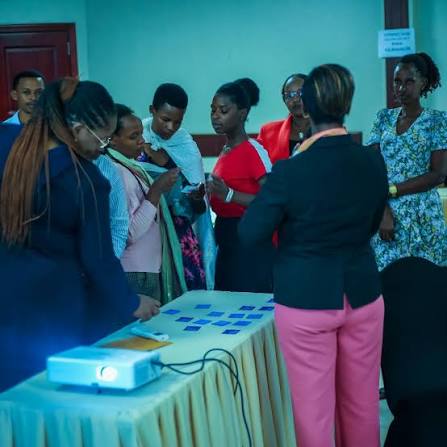
Women account for 45.4 per cent of jobs across 24 solar companies participating in a Rwanda energy programme, while expanded access to affordable solar power is helping women entrepreneurs extend their working hours and improve their livelihoods.
For Rwandan hairdresser Donathile Mukandayisenga, solar power means she no longer has to stop braiding clients’ hair when daylight fades. Solar lighting allows her to work into the evening and charge the smartphone she uses to show customers different hairstyles.
Her experience reflects a wider shift in Rwanda, where investments in renewable energy are opening opportunities for women to grow businesses, access electricity and find employment in an expanding green economy.
According to the World Bank, Rwanda’s electricity access rate rose from 6 per cent in 2009 to an estimated 85 per cent in 2025, marking a significant expansion in access to power.Women have been central to this progress.
By December 2024, Rwanda’s Renewable Energy Fund (REF) had reached more than two million beneficiaries, 52 per cent of them women, through a programme designed to make off-grid solar systems more affordable.
The initiative highlights how reducing the cost of energy can help women overcome barriers to economic participation.
Affordable Solar Power Supports Women Entrepreneurs
For small business owners, access to reliable electricity can determine how long they operate, which services they offer and whether they can invest in equipment to expand their businesses.
Mukandayisenga can now serve customers after dark, creating more opportunities to earn income. However, her current solar system can only power lighting and phone charging. Equipment such as hair clippers and dryers requires greater power capacity.
Her experience illustrates a challenge facing many small businesses: gaining access to electricity is an important first step, but entrepreneurs may need larger systems and additional financing to increase productivity and grow their operations.
Solar power is also changing life for women in rural households. Farmer Mediatrice Uwimana says electricity allows her to charge her phone, communicate with others and help her children study after dark.As For women balancing household responsibilities with income-generating activities, these changes can provide greater flexibility and access to essential services.
Targeted Subsidies Help Close the Energy Gap
For years, the upfront cost of electricity systems remained a major obstacle for low-income households, particularly those headed by women.
The World Bank reported that in 2022, electricity access among female-headed households in Rwanda stood at 56.1 per cent, compared with 66.7 per cent among male-headed households. Among women without electricity, more than six in 10 identified the initial cost of connection as their main barrier.
Traditional lending had struggled to reach many of these households. In response, the Renewable Energy Fund introduced a results-based financing facility in October 2020, offering partial grants to reduce the cost of off-grid solar systems.
The programme removed requirements such as collateral, formal credit histories and membership in savings cooperatives, which could exclude households unable to meet conventional lending conditions.
Subsidies were structured to provide greater support to those facing the largest affordability gaps.
The results marked a significant expansion in reach. After the programme initially struggled to attract new users and adequately include women, the revised approach helped the fund reach more than two million beneficiaries by December 2024.
The experience underscores the importance of designing energy financing around the circumstances of underserved households rather than relying exclusively on conventional loans.
Women Gain Ground in the Renewable Energy Workforce
Rwanda’s solar expansion is also creating employment opportunities beyond household energy access.Women held 45.4 per cent of jobs across the 24 off-grid solar companies participating in the Renewable Energy Fund programme, well above its target of at least 10 per cent. In 10 of the companies, women made up more than half of the workforce.
The jobs span project coordination, customer service, installation support and maintenance, demonstrating the range of roles available as the sector grows.
Eva Mugisha, a project coordinator at SaferOne, helps households navigate the process of acquiring solar home systems. At ENGIE Energy Access, Justine Dukuzumuremyi works as an installation and maintenance coordinator, supporting customers and helping ensure their systems continue operating effectively.
Their roles illustrate how renewable energy businesses can create employment in local communities while opening pathways for women into technical and operational work.
The opportunity is particularly relevant as African countries seek to expand electricity access and develop the skilled workforce needed to support renewable energy markets. De
However, increasing women’s representation in the workforce is only one part of the challenge. Access to technical training, career progression and leadership opportunities will also shape whether women benefit from the industry’s long-term growth.
Lessons for Africa’s Green Economy
Rwanda’s experience comes as the World Bank Group and the African Development Bank Group pursue Mission 300, an initiative aimed at connecting 300 million people in Africa to electricity by 2030.
The initiative presents an opportunity to ensure that electricity expansion delivers economic benefits alongside improved access to power.
Rwanda’s approach demonstrates how targeted subsidies, gender-focused monitoring and deliberate employment targets can help women participate both as energy consumers and as workers in the renewable energy sector.
The country’s experience is also being carried forward through other energy initiatives, including the World Bank-supported Energy Access and Quality Improvement Project and the Accelerating Sustainable and Clean Energy Access Transformation initiative.
For other African countries, the lesson is that expanding electricity access requires more than installing solar systems. Women entrepreneurs may also need affordable financing for higher-capacity equipment, business development support and access to markets. Meanwhile, women entering the energy workforce need opportunities to build technical skills and progress into senior roles.
For Mukandayisenga, the immediate benefit is the ability to continue working after sunset. For the wider economy, the opportunity lies in turning access to clean energy into more productive businesses, sustainable jobs and greater economic independence for women.
As Africa accelerates its transition to renewable energy, ensuring women can participate as business owners, skilled workers and industry leaders will be essential to making that transition more inclusive.
About the Author