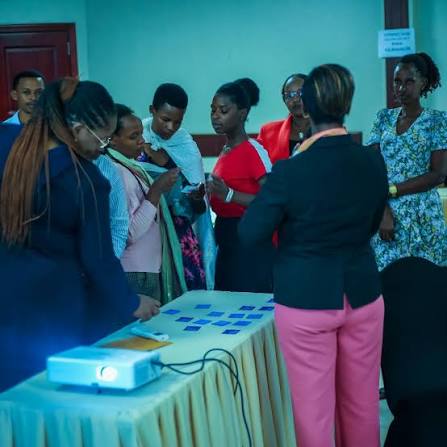
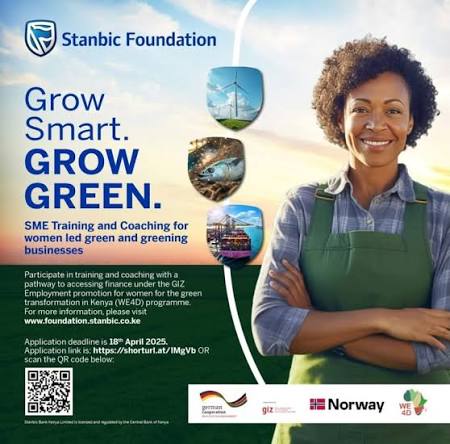
A total of 351 entrepreneurs have graduated from the Women Employment for the Green Transformation (WE4D) programme, an initiative by Stanbic Kenya Foundation and German development agency GIZ aimed at helping small and medium-sized enterprises grow, create jobs and adopt environmentally sustainable business practices.
Women made up 85% of the graduating cohort, highlighting their growing role in entrepreneurship and Kenya’s transition towards a greener, more inclusive economy.
The programme provides entrepreneurs with business training, access to finance, market linkages and support to create green jobs. It operates across 10 counties: Kisumu, Kericho, Kisii, Nyamira, Homa Bay, Uasin Gishu, Bungoma, Busia, Kakamega and Vihiga.
According to the programme’s reported figures, it has reached 706 business owners and supported 2,378 jobs, including 1,591 held by young people and 32 by persons with disabilities.
Women Entrepreneurs at the Centre of Green Growth
Agriculture and agro-processing account for the largest share of participating businesses. Other enterprises operate in aquaculture, manufacturing, sustainable tourism, the circular economy and natural health solutions.
The programme is also supporting businesses developing climate-smart agriculture, waste recovery and value-addition solutions, helping entrepreneurs improve productivity while adopting more environmentally responsible practices.
For women entrepreneurs, access to business development support, financing and markets can help address some of the barriers that limit business growth, including limited capital, weak market access and gaps in financial management.
Stanbic Bank Kenya and South Sudan Chief Executive Michael Mutiga said the initiative demonstrates how entrepreneurship can drive sustainable development by helping women- and youth-led businesses improve productivity, adopt climate-conscious practices and become investment-ready.
From Business Training to Job Creation
Beyond training, participating entrepreneurs have reported improvements in business formalisation, financial management, record-keeping, governance and staff management.
Some businesses have secured new customers, supply contracts and export opportunities, expanded their operations and created additional jobs.
Mercy Githanji, executive director and head of Stanbic Kenya Foundation, said the next phase will focus on helping small and medium-sized enterprises access markets, financing, technical expertise and opportunities to scale sustainably.
She emphasised the importance of economic empowerment, financial and digital inclusion, and climate resilience in helping women, young people and other entrepreneurs contribute to Kenya’s economic growth.
The programme was commissioned by Germany’s Federal Ministry for Economic Cooperation and Development (BMZ) and co-funded by the European Union and the Norwegian Government.
As Kenya pursues green growth and employment creation, initiatives such as WE4D highlight the potential of investing in women entrepreneurs not only to strengthen individual businesses but also to build more resilient local economies.
For African women, access to finance, markets and business development support remains critical to turning entrepreneurial potential into sustainable businesses, decent jobs and long-term economic independence.
About the Author