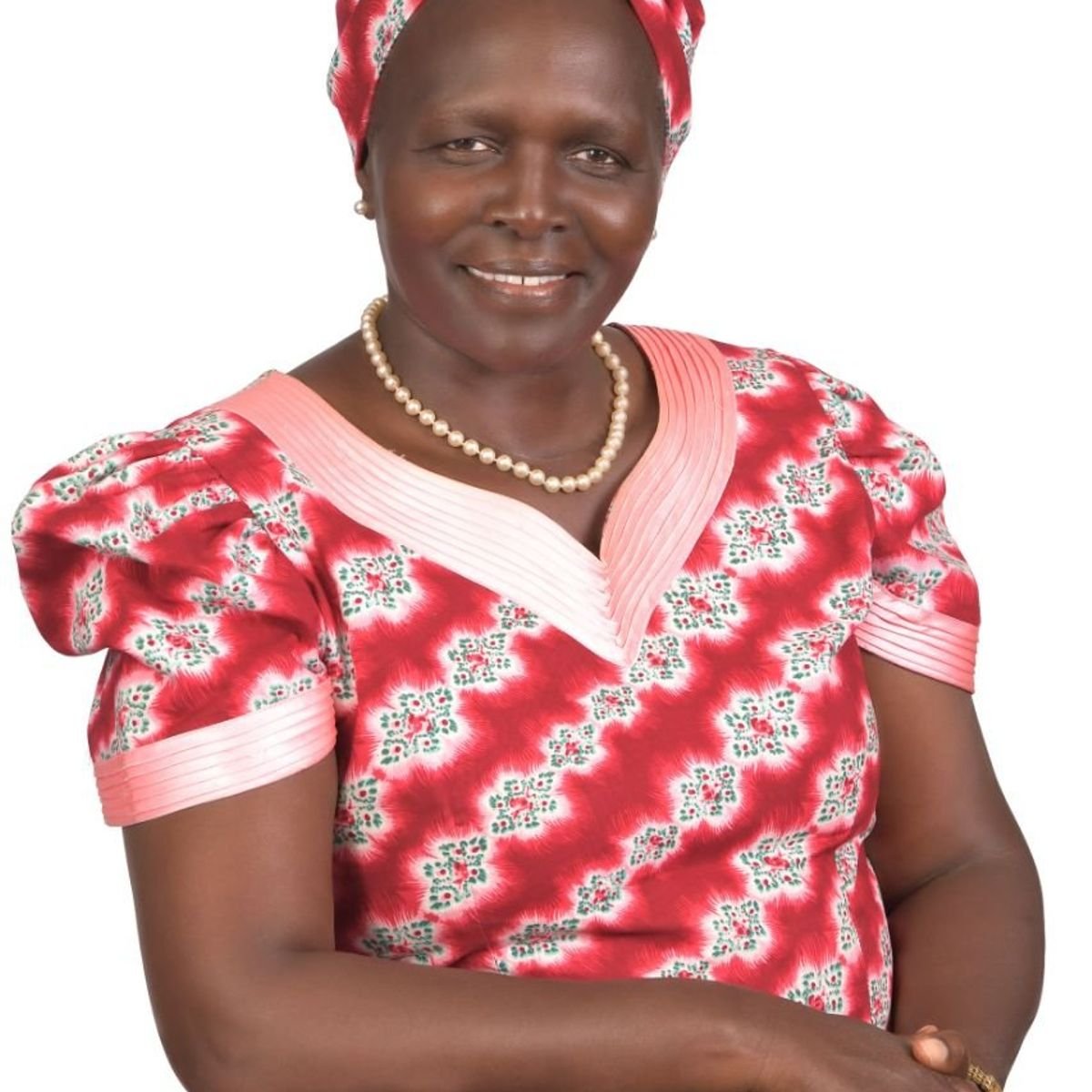
Prof. Margaret Jepkoech Kamar has been recognised with a Lifetime Achievement Award in Legislative Leadership, Education and Public Service, celebrating a career spanning academia, science, politics and national service.
The recognition honours Kamar’s contribution to Kenya’s legislative and public institutions, as well as her longstanding work in education and academic leadership.
A professor of soil science, former Cabinet Minister and former Senator for Uasin Gishu, Kamar has built a career that has taken her from the university classroom to Parliament, the East African Legislative Assembly and the national government.
She also made history as the first elected woman Deputy Speaker of the Senate of Kenya, a milestone that placed her among the women who have helped shape Kenya’s evolving political leadership landscape.
Margaret Kamar’s Education and Academic Journey
Kamar’s leadership journey began with a strong academic foundation in agriculture and environmental science.
She earned a Bachelor of Science in Agriculture from Punjab Agricultural University in India, before pursuing postgraduate studies in Canada. She obtained a Master of Education from McGill University and later a PhD in Soil Science from the University of Toronto.
Her academic career was closely connected to agriculture, environmental sustainability and higher education.
In 1988, Kamar worked as a soils consultant with the United Nations Environment Programme (UNEP) during the development of a desertification map.
She later joined Moi University, where she became a Professor of Soil Science in 1999 and held senior academic leadership positions, including serving as Deputy Vice-Chancellor.
Her academic expertise would eventually become an important part of her public-service career, particularly in areas involving agriculture, environmental management, science and higher education.
From Academia to Regional Politics
Before entering Kenya’s national elective politics, Kamar gained experience in regional legislative leadership.
Between 1999 and 2006, she served as a member of the East African Legislative Assembly (EALA) and chaired its Environment, Natural Resources, Agriculture and Tourism Committee.
Her work also took her onto the international stage. In 2002, she led a delegation to the World Summit on Sustainable Development in South Africa, contributing to discussions around environmental and sustainable development issues.
Her regional experience provided a foundation for her eventual transition into Kenya’s national political arena.
Entering Kenya’s National Politics
Kamar entered elective politics in 2007, when she was elected Member of Parliament for Eldoret East.
Her political career continued to develop alongside her interest in education, science, agriculture and environmental issues.
She subsequently served in the national government, taking on responsibilities that closely aligned with her academic background.
Serving in Government
Kamar served as Assistant Minister for Environment and Mineral Resources from 2010 to 2011.
She was later appointed Cabinet Minister for Higher Education, Science and Technology, serving from 2011 to 2013.
The appointment brought together two major strands of her career,academic expertise and public policy.
As a scholar and university leader, she had spent years working within higher education. As a Cabinet Minister, she was able to bring that experience into national policymaking at a time when Kenya was strengthening its focus on higher education, science and technology.
Making History in the Senate
In 2017, Kamar was elected Senator for Uasin Gishu County, marking another major chapter in her political career.
She subsequently became the first elected woman Deputy Speaker of the Senate of Kenya, serving from 2017 to 2022.
The position represented an important milestone for women in Kenya’s political leadership and demonstrated the growing role of women in senior legislative positions.
Her Senate career added another dimension to a professional journey that had already included academia, regional parliament and Cabinet leadership.
A Career Across Education, Science and Politics
What makes Kamar’s career distinctive is the breadth of her experience.
She has worked as an academic and researcher, served in international environmental initiatives, participated in regional legislation, represented constituents in Parliament and served in Kenya’s national government.
Her career has consistently connected knowledge with public service.
Her background in soil science and environmental studies informed her engagement with agriculture and environmental policy, while her experience in academia gave her a strong connection to higher education and scientific research.
After her government service, she continued her involvement in development issues and became director of the International Centre for Research in Sustainable Development.
A Lifetime of Leadership Recognised
The Lifetime Achievement Award in Legislative Leadership, Education and Public Service recognises the breadth of Kamar’s contribution across several sectors.
It is also a recognition of a woman who has occupied leadership spaces traditionally dominated by men and helped create greater visibility for women in Kenya’s political institutions.
Her achievement as the first elected woman Deputy Speaker of the Senate remains one of the defining milestones of her political career.
But her legacy extends beyond that single achievement.
From her academic journey in agriculture and soil science to her work with UNEP, her years at Moi University, regional legislative service, Cabinet leadership and Senate career, Kamar’s story reflects a lifetime of combining education, expertise and public service.
Margaret Kamar’s Leadership Legacy
Prof. Margaret Kamar’s journey offers an example of how education and professional expertise can become a foundation for leadership beyond the classroom.
Her career has crossed academia, science, environmental policy, government and politics, giving her a unique perspective on public service and national development.
For women aspiring to leadership in Kenya, her story is also a reminder that political leadership can be built on different foundations,including education, professional expertise, experience and a commitment to public service.
As she receives recognition for her lifetime of service, Prof. Margaret Kamar’s career stands as part of the broader story of women who have helped expand the boundaries of leadership in Kenya.
About the Author