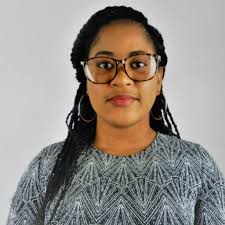
For Goabaone Jaqueline Ramatlapeng, water is not just a scientific focus—it is a lifelong mission shaped by lived experience.
Growing up in Kopong, a small village in southern Botswana, she witnessed firsthand the harsh reality of water scarcity. With taps often running dry, families depended on unsafe river water, a reality that sparked both concern and curiosity in her at a young age.
That curiosity quickly turned into action. As a middle school student, she won Botswana’s National Science Fair Ecology Award for an innovative project using Moringa seeds to purify contaminated water. This defining moment set the foundation for her career.
Today, Dr Ramatlapeng stands as Botswana’s first female hydrogeochemist (PhD), a remarkable milestone in a field traditionally dominated by men. Her work focuses on understanding the chemical composition of water systems and how they interact with ecosystems and human health.
She currently serves as a Project Lead under the National Geographic Society through the Okavango Wilderness Project, where she is also recognised as a Wayfinder and Explorer. Her research is deeply rooted in the globally significant Okavango Delta, one of the world’s most important wetlands.
Dr Ramatlapeng’s journey into hydrogeochemistry was driven by a simple but profound question: How can water systems be improved to sustain life? As a child flipping through an atlas and imagining oceans far beyond Botswana’s borders, she dreamed of solutions to her community’s water challenges.
That early imagination evolved into a career dedicated to safeguarding freshwater systems. Today, her work sits at the intersection of science and indigenous knowledge—an approach that is redefining conservation.
Empowering Communities through Science
One of her most impactful contributions is shifting conservation from a top-down model to a community-driven approach. In the Okavango Delta, she leads initiatives that empower local people—especially women and youth—to actively participate in water monitoring and ecosystem protection.
Through citizen science programmes, communities now:
- Collect and analyse water samples
- Monitor fisheries and ecosystem health
- Apply both scientific data and indigenous knowledge to decision-making
This model transforms communities from passive observers into active custodians of their environment.
Influences and Inspirations
Dr Ramatlapeng’s journey has been shaped by powerful influences. Her mother, deeply connected to nature, instilled in her a respect for the environment. Academically, mentors like Dr Loago Molwalefhe at BIUST and global scholars such as Dr Eliot Atekwana and Dean Estella Atekwana helped refine her scientific path.
Equally important are the communities of the Okavango Delta. Their generational knowledge of wetlands—understanding flood cycles, water quality, and biodiversity—continues to guide and inspire her work.
Breaking Barriers in Science
As a Black woman in water science, Dr Ramatlapeng has often found herself the only woman in the room. This underrepresentation has not deterred her—it has strengthened her resolve.
She actively mentors young women and girls, creating pathways into STEM fields and ensuring that future generations see themselves reflected in science and conservation leadership.
According to Dr Ramatlapeng, two key challenges have shaped her work: persistent gender inequality in science, which limits women’s participation in decision-making, and a longstanding disconnect between research and communities, where studies are often conducted about people rather than with them. In response, she has adopted a transformative approach—building trust through inclusive, community-based research models that prioritise collaboration, shared knowledge, and active participation over extractive practices.
Investing in Women for Sustainable Futures
Dr Ramatlapeng strongly advocates for greater investment in women and girls, particularly in rural wetland communities. She highlights barriers such as limited access to education, period poverty, and restrictive gender norms that prevent many girls from pursuing science.
Her approach focuses on:
- Expanding access to education and research opportunities
- Providing mentorship to prevent women from leaving STEM pathways
- Creating leadership platforms for women in environmental decision-making
Aligned with the spirit of International Women’s Day 2026, Dr Ramatlapeng’s work embodies the idea of giving to gain.
Rather than positioning herself solely as an expert, she creates spaces for mutual learning. By valuing indigenous knowledge and integrating it with scientific research, she has built trust and lasting partnerships within communities.
The result is powerful: stronger conservation outcomes, better science, and communities that lead the protection of their own ecosystems.
A Legacy in the Making
Dr Goabaone Jaqueline Ramatlapeng is redefining what it means to be a scientist in Africa today. Her work goes beyond research—it is about impact, inclusion, and sustainability.
From a young girl questioning unsafe water in a rural village to a globally recognised hydrogeochemist, her journey is a testament to the power of curiosity, resilience, and purpose.
Her mission is clear: ensure that no community has to choose between unsafe water and no water at all—and in doing so, protect the future of one of the world’s most vital ecosystems.
About the Author