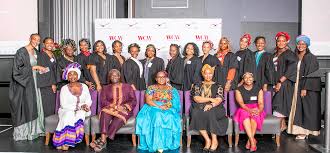
The Graça Machel Trust has graduated 114 women from its flagship Women Creating Wealth (WCW) programme.
This latest cohort brings the total number of women supported in the country to 726, signalling a steady and intentional shift toward women-led economic transformation.
At its core, the Women Creating Wealth programme is designed to go far beyond conventional entrepreneurship training. Delivered in partnership with the Mastercard Foundation, WCW equips women with the technical, strategic, and psychological tools needed to transition from income generation to sustainable wealth creation.
The programme integrates business development training, mentorship, and high-value networking opportunities, while also addressing a critical yet often overlooked component: mindset. Participants are guided to think bigger, plan longer-term, and position their enterprises for scale.
A central component of the programme is the Ignite phase, an intensive learning journey where entrepreneurs refine their business models, identify growth opportunities, and develop structured three-year expansion plans. This is complemented by a master mentorship model, where programme graduates reinvest their knowledge by mentoring incoming cohorts—creating a self-sustaining ecosystem of growth and support.
For many African women entrepreneurs, the biggest barriers are not ideas or ambition—but access. WCW directly addresses these systemic challenges by connecting participants to financing opportunities and broader markets.
Across the continent, the programme has already supported over 6,400 women entrepreneurs, created more than 38,300 jobs, and catalysed approximately $14.5 million in financing. These numbers point to a broader economic impact: when women gain access to resources, entire communities benefit.
The 114 graduates in Malawi represent a dynamic cross-section of the economy. Their ventures span agriculture, manufacturing, tourism, ICT, renewable energy, construction, trade and services, and transport—sectors that are critical to national development.
Through their work, these women are strengthening local value chains, introducing innovation, and addressing community challenges. Some are reimagining sustainability, turning waste into building materials or integrating renewable energy into their operations, demonstrating that growth and environmental responsibility can go hand in hand.
Shifting the Narrative on Women and Wealth
The significance of WCW lies not only in its outcomes but in its philosophy. It challenges long-standing narratives that confine women to micro-enterprises or subsistence-level businesses. Instead, it positions women as wealth creators, employers, and economic leaders.
This shift is critical. Studies suggest that closing the gender gap in entrepreneurship could add as much as $230 billion to Africa’s GDP by 2030. Programmes like WCW are laying the groundwork for that future—one entrepreneur at a time.
As the 114 graduates step forward, they carry more than certificates—they carry vision, capacity, and the power to transform economies from the ground up.
Their success is not isolated. It is part of a growing movement across Africa where women are claiming space, scaling enterprises, and redefining what economic leadership looks like.
For Malawi, this moment signals momentum. For Africa, it signals possibility.
And for the next generation of women entrepreneurs, it sends a clear message: wealth creation is not out of reach—it is already in motion.
About the Author