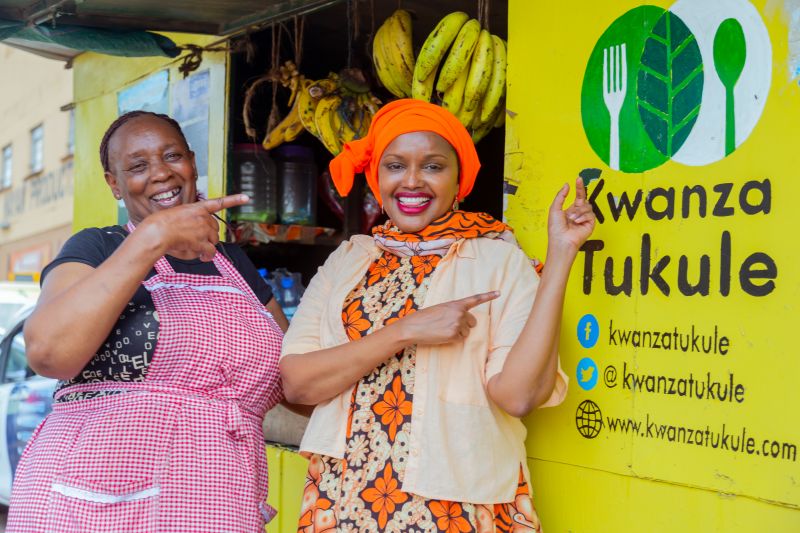
Khadija Mohamed-Churchill, founder of Kwanza Tukule, is empowering Nairobi’s street food vendors with affordable supplies, clean cooking solutions, and tech-enabled distribution.
Every day in Nairobi, thousands of women run street food businesses, working long hours to feed the city, yet struggling with high costs, limited access to quality ingredients, and inefficient supply chains. Kwanza Tukule is tackling some of the most pressing challenges faced by street food vendors—affordability, accessibility, and quality—through a socially responsible supply chain and an efficient last-mile distribution model.
According to Khadija, the turning point came when she recognised a critical gap in the urban food ecosystem. After spending a decade in London, Khadija Mohamed-Churchill returned to Kenya, determined to find a solution. In 2019, she launched Kwanza Tukule—a tech-enabled platform designed to support street food vendors, enhance food security, and strengthen urban food economies.
At the heart of its mission is the delivery of affordable food supplies, including pre-boiled pulses, staple ingredients, and clean energy solutions, directly to vendors. This not only simplifies procurement but also ensures consistency in quality and pricing.
Kwanza Tukule promotes health and sustainability by reducing reliance on charcoal and firewood—cutting smoke exposure by up to 70%—while using green energy and minimising waste. It also improves nutrition by enabling vendors to offer affordable, protein-rich meals.
Kwanza Tukule also plays a critical role in supporting farmers. Through direct sourcing, it reduces post-harvest losses and provides farmers with reliable market access, creating a more inclusive and efficient food ecosystem.
Operating as a B2B, cashless, mobile-based platform, Kwanza Tukule seamlessly connects vendors with suppliers. It eliminates the need for long, costly trips to wholesale markets by delivering essential goods—such as pre-prepared pulses, cereals, staple ingredients, and affordable cooking energy—straight to vendors. This streamlined system not only cuts operational costs and saves time but also boosts profitability, while improving access to nutritious, plant-based proteins for low-income communities.
Today, more than 8,000 micro-entrepreneurs depend on Kwanza Tukule’s services to run and grow their businesses. The platform has transformed how these vendors operate, enabling them to plan their day more efficiently through reliable and timely supply deliveries. By cutting down costs and easing operational pressures, it has also improved profitability, allowing vendors to earn better margins.
Khadija’s innovative approach demonstrates how technology and social entrepreneurship can solve real-world problems. By combining tech, supply chain efficiency, and sustainable practices, Kwanza Tukule strengthens urban food ecosystems and supports women-led businesses in Nairobi’s informal settlements.
With a strong background in banking and tech consulting, Khadija spent over 11 years in London after completing an MBA at Imperial College London. She also participated in the Young African Leadership Initiative (YALI) 2016 fellowship, which shaped her leadership and entrepreneurial vision.
In 2025, she was recognised as one of the ABH Top 20 Africa’s Business Heroes, a testament to her impactful work in the food distribution sector.
Her recognition as a Top 20 ABH 2025 finalist shows the potential of ideas that meet real community needs. Investors, partners, and development organizations continue to support Kwanza Tukule’s expansion, ensuring more vendors and farmers benefit across East Africa.
Khadija Mohamed-Churchill and Kwanza Tukule are proof that entrepreneurship can drive social impact. By leveraging technology, mentorship, and sustainable practices, Kwanza Tukule transforms street food vending from a survival strategy into a thriving business opportunity, empowering women, supporting farmers, and improving food security in Nairobi.
About the Author