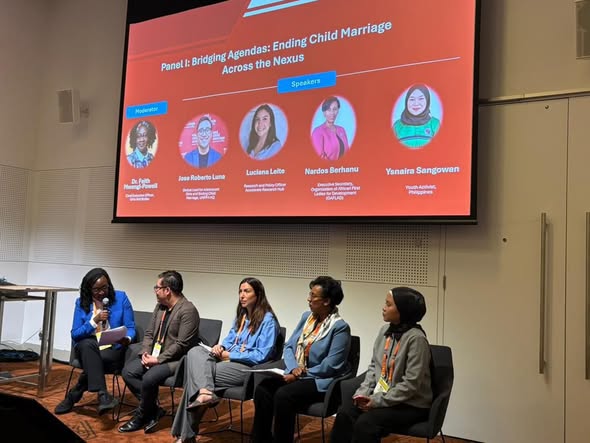
Global efforts to end child marriage are intensifying, with GLF Africa 2026 in Nairobi and Women Deliver 2026 in Melbourne driving coordinated action.
The events bring together policymakers, advocates, and development partners around one shared priority: building inclusive systems that safeguard girls’ rights and futures.
While GLF Africa focuses on sustainable land use and climate resilience, the Women Deliver Conference is placing strong emphasis on gender equality, particularly the urgent need to eliminate child marriage in fragile, conflict-affected, and climate-vulnerable settings.
Together, these global platforms highlight a critical intersection: climate change, poverty, and gender inequality are increasingly shaping the conditions that drive child marriage across Africa and beyond.
At the heart of the global advocacy movement is Fatima Maada Bio, whose leadership has become central to Africa’s child protection agenda.
Speaking at the high-level side event “No Time to Lose: Scaling Solutions and Financing to End Child Marriage in Humanitarian Settings and Beyond,” she delivered a powerful message rooted in lived experience and national reform.
“Ending child marriage is personal for me, as a First Lady, as a mother, and as a woman,” she said, referencing Sierra Leone’s national campaign Hands Off Our Girls and the landmark Prohibition of Child Marriage Act 2024.
Her message reframed child marriage as more than a social issue. It is a humanitarian crisis requiring urgent, well-funded intervention, particularly in fragile settings.
Child Marriage in Africa: The Scale of the Crisis
Despite decades of advocacy and policy reform, child marriage remains deeply entrenched across Africa, reflecting persistent inequalities and systemic gaps. Current estimates indicate that around 130 million women and girls on the continent were married before the age of 18, underscoring the sheer scale of the challenge.
Africa continues to hold the largest share of child brides globally, with West and Central Africa accounting for a significant proportion of cases. At the same time, East and Southern Africa also report consistently high prevalence rates, highlighting that the issue cuts across regions.
Globally, approximately 650 million women have experienced child marriage, placing Africa at the centre of this ongoing crisis. In countries such as Niger, prevalence rates remain among the highest in the world, while Nigeria records some of the largest absolute numbers due to its population size. Together, these figures illustrate a complex and urgent challenge that requires sustained, coordinated action.
While global efforts have contributed to a roughly 15% decline in child marriage over the past decade, progress remains uneven and far too slow to meet global targets. Each year, an estimated 12 million girls are still married before the age of 18, underscoring the scale of the challenge that persists.
The burden is disproportionately felt in rural areas, where child marriage rates are more than double those in urban settings. In West and Central Africa alone, over 60 million women have experienced child marriage, reflecting deep structural inequalities across regions. At the same time, emerging pressures, particularly climate shocks and economic instability, are increasing vulnerability in already fragile communities. Without accelerated, coordinated action, population growth and environmental stressors risk reversing the gains made so far.
Why Child Marriage Persists in Africa
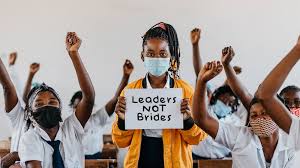
Child marriage in Africa is not driven by a single cause but by a web of interconnected structural factors. Poverty remains one of the most significant drivers, with many families viewing early marriage as a coping mechanism during economic hardship.
Access to education plays a decisive role. Girls who are out of school or have limited educational opportunities are significantly more likely to marry early, reinforcing cycles of vulnerability. Cultural and social norms further entrench the practice, with traditions and stigma, particularly around premarital pregnancy, continuing to shape decisions at the household level.
In fragile and humanitarian settings, the risks are even higher. Conflict, displacement, and climate-related disruptions often push families toward early marriage as a perceived form of protection or survival strategy.
One of the clearest messages emerging from global platforms is that child marriage rates can nearly double in crisis settings. In environments marked by conflict, displacement, or climate shocks, families often face extreme uncertainty, making early marriage appear as a short-term solution despite its long-term consequences.
In response, organisations such as UNFPA, UNICEF, and Girls Not Brides are advocating for integrated strategies that link humanitarian aid with education, health services, and gender protection systems. The goal is to address not just the symptoms, but the underlying vulnerabilities that drive the practice.
Barriers to Ending Child Marriage
Despite growing global attention, several systemic barriers continue to hinder progress. Limited access to secondary education remains a critical gap, particularly for girls in rural and low-income communities. At the same time, weak enforcement of child protection laws undermines policy gains, while chronic underfunding restricts the scale of prevention programs.
Economic instability further compounds the issue, especially in informal and rural economies where families lack financial security. Climate change is adding another layer of vulnerability, intensifying resource scarcity and displacement. Underpinning all these challenges is persistent gender inequality, particularly in land ownership, access to finance, and decision-making power.
These barriers do not operate in isolation; they reinforce one another, making child marriage a deeply structural issue that requires systemic solutions.
What Is Working: Emerging Successes
Despite the challenges, there are clear signs of progress across the continent. Many African countries have strengthened legal frameworks, setting the minimum age of marriage at 18. At the same time, investments in girls’ education and empowerment programs are expanding, creating new pathways for prevention.
Community-led initiatives are proving particularly effective in shifting social norms, demonstrating the importance of local ownership in driving change. Cross-sector partnerships between governments, civil society, and development organisations are also strengthening prevention systems, while grassroots advocacy is improving awareness and reporting.
Although progress remains uneven, these efforts show that sustained, locally grounded interventions can deliver measurable impact.
A significant shift in the global response to child marriage is the growing recognition of young people as active agents of change. Youth advocates—many with lived experience—are increasingly involved in designing programs, shaping policy discussions, and leading awareness campaigns.
Their participation is helping to ensure that interventions are grounded in real-world experiences, making them more effective and responsive. This shift toward participatory development models is redefining how solutions are designed and implemented.
Building Coalitions for Impact
The movement to end child marriage is becoming increasingly collaborative, bringing together governments, civil society, and international partners. Organisations such as Zonta International and the Accelerate Research Hub are working alongside development partners, including DFAT, FCDO, and Global Affairs Canada, to scale impact.
This coalition-based approach reflects a growing consensus: addressing child marriage requires coordinated, multi-sector action across local, national, and global levels.
The Way Forward: A Systems-Based Approach
Ending child marriage in Africa will require sustained, long-term structural transformation. Education remains the most effective prevention strategy, with keeping girls in school directly linked to delayed marriage and improved life outcomes.
Economic empowerment is equally critical, as strengthening household incomes reduces the financial pressures that often drive early marriage. At the same time, legal frameworks must be backed by consistent enforcement to ensure real accountability.
Community engagement is essential for shifting entrenched social norms, while investments in health systems, safe spaces, and social protection programs will help create supportive environments for girls.
About the Author