Kenya’s journey towards constitutional democracy was not shaped by men alone. Behind the historic Constitution of Kenya 2010 stood courageous women who challenged injustice, championed equality, and fought to ensure that women’s voices would never again be excluded from the nation’s governance.
Their unwavering advocacy helped secure some of the Constitution’s most progressive provisions, including the Two-Thirds Gender Rule, a robust Bill of Rights, and stronger protections for women’s political, economic, and land rights.
As African Women Network continues its Her Voice. Her Leadership. Kenya’s Future campaign, we celebrate the remarkable women whose leadership transformed Kenya and whose legacy continues to inspire a new generation.
Martha Karua: The Iron Lady of Constitutional Reform
One of Kenya’s most respected political figures, Martha Karua emerged as a fearless advocate for democracy, justice, and gender equality.
As Minister for Justice and Constitutional Affairs, she championed legal reforms and affirmative action policies that laid the foundation for greater inclusion of women in leadership. Her unwavering commitment to constitutionalism earned her the reputation as Kenya’s “Iron Lady.”
Leadership Lesson: Courage means standing for what is right, even when it is unpopular.
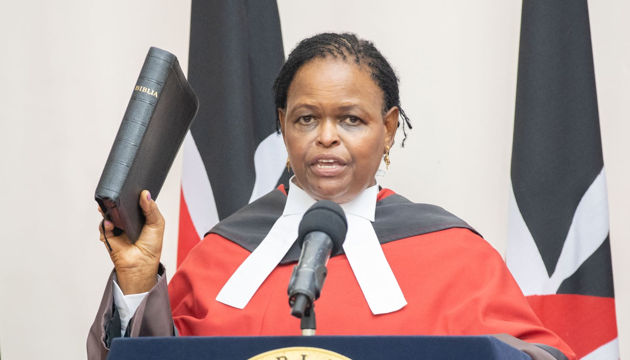
Martha Koome: Breaking Barriers in Justice
Long before becoming Kenya’s first female Chief Justice, Martha Koome dedicated her career to defending human rights, advocating for women’s rights, and challenging discriminatory laws.
Her contribution to constitutional reforms helped shape legal protections that continue to safeguard equality and justice today.
Leadership Lesson: Leadership begins with serving others and defending justice.
Phoebe Asiyo: A Pioneer of Affirmative Action
Years before gender equality became a constitutional requirement, Phoebe Asiyo boldly introduced one of Kenya’s earliest affirmative action motions in Parliament.
Her vision helped ignite national conversations about women’s representation that eventually culminated in the constitutional recognition of the Two-Thirds Gender Rule.
Leadership Lesson: One bold idea can shape a nation’s future.
Sophia Abdi Noor: Building Unity Across Communities
During one of Kenya’s most politically sensitive periods, Sophia Abdi Noor mobilized women across ethnic and political divides, demonstrating that women’s leadership is strongest when built on unity rather than division.
Her work reinforced the idea that women could influence national policy through collaboration and shared purpose.
Leadership Lesson: Unity is one of the greatest strengths of effective leadership.
Atsango Chesoni: Shaping Kenya’s Constitution
As Vice-Chairperson of the Committee of Experts on Constitutional Review, Atsango Chesoni played a central role in drafting the Constitution that transformed Kenya’s governance landscape.
Her legal expertise helped ensure gender equality was embedded within the country’s supreme law.
Leadership Lesson: Expertise and integrity create lasting national impact.
Wangarĩ Maathai: Linking Environment, Democracy and Leadership
Nobel Peace Prize laureate Prof. Wangarĩ Maathai proved that environmental conservation, democracy, and human rights are deeply connected.
Through the Green Belt Movement and decades of civic activism, she inspired countless women to become agents of change while pushing for accountable leadership and democratic governance.
Leadership Lesson: Leadership is about serving people, protecting the environment, and leaving a better future for generations to come.
Women’s Organisations That Changed History
Kenya’s constitutional gains were also made possible through the tireless work of women’s organisations and civil society movements.
The Federation of Women Lawyers (FIDA Kenya) provided legal expertise that strengthened constitutional protections for women.
The G10, a coalition of women’s rights organisations, presented a united voice demanding equal representation and stronger legal protections.
Meanwhile, women participating in the Ufungamano House Movement helped ensure that ordinary citizens had a voice in shaping Kenya’s constitutional future.
These collective efforts demonstrated that lasting change happens when women organise, collaborate, and advocate together.
The Journey Continues
Although Kenya has made significant progress since 2010, the work is far from complete. The continued implementation of the Two-Thirds Gender Rule remains essential to fulfilling the Constitution’s promise of equality and inclusive governance.
The women who shaped Kenya’s Constitution remind us that meaningful change begins when courageous leaders refuse to accept inequality as the status quo.
Their legacy continues to inspire young women to participate in politics, public service, law, civil society, and leadership.
Because when women lead, democracy grows stronger, communities prosper, and nations thrive.
Her Voice. Her Leadership. Kenya’s Future.
About the Author