Long before phrases like “breaking the glass ceiling” became synonymous with women’s empowerment, one African woman was already doing exactly that on the world’s biggest diplomatic stage.
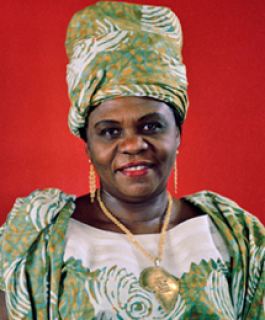
In 1969, as nations around the world grappled with decolonization, Cold War tensions, and the fight against apartheid, an African woman quietly made history. Angie Elizabeth Brooks of Liberia became the first African woman, and only the second woman ever, to be elected President of the United Nations General Assembly.
At a time when few women occupied positions of political influence and African voices were still fighting for recognition in global affairs, Brooks chaired the world’s largest diplomatic forum with confidence, intellect, and unwavering conviction. Her election was more than a personal achievement; it was a defining moment for Africa, for women, and for international diplomacy.
Yet despite breaking one of the most formidable barriers in global governance, Angie Brooks remains one of history’s most overlooked pioneers.
Her remarkable career unfolded decades before leadership programs for women, diversity initiatives, and gender quotas became common policy discussions. She proved through competence,not symbolism,that African women belonged in the highest corridors of global power.
Today, as more African women assume leadership roles in governments, multinational corporations, international organizations, and diplomatic missions, Brooks’ legacy offers a powerful reminder that the journey toward gender equality did not begin in the twenty-first century. It was built by courageous women who challenged deeply entrenched norms, often with little recognition.
For every African woman aspiring to lead beyond borders, Angie Brooks left behind a blueprint rooted in courage, excellence, and service.
Humble Beginnings, Extraordinary Vision
Born on August 24, 1928, in Monrovia, Liberia, Angie Elizabeth Brooks grew up in a nation unlike most African countries of her generation. Liberia had maintained its independence while much of the continent remained under colonial rule, exposing Brooks early to questions of governance, sovereignty, and Africa’s place in world affairs.
From a young age, education became her pathway to opportunity.She attended the prestigious College of West Africa before pursuing legal studies in the United States, earning a law degree from Shaw University and undertaking further studies in international law. At a time when very few African women entered the legal profession, Brooks chose a career that demanded analytical thinking, resilience, and public service.
Her legal education would later become one of her greatest diplomatic assets.Law taught her how to negotiate complex issues, interpret international agreements, and defend principles of justice—skills that would define her career on the global stage.
Returning to Liberia, Brooks entered public service during an era when women rarely occupied influential government positions. Rather than accepting traditional expectations, she steadily established herself through professionalism, competence, and intellectual rigor.
Her rise demonstrated an important lesson that remains relevant today: lasting leadership is built on preparation long before opportunity arrives.
A Diplomat at a Turning Point in African History
The 1950s and 1960s transformed Africa.Across the continent, independence movements gathered momentum. One after another, African nations threw off colonial rule and sought recognition as sovereign states.
The United Nations became the arena where newly independent countries fought not only for political legitimacy but also for economic justice, racial equality, and an end to colonial domination.
It was within this historic moment that Angie Brooks emerged as one of Liberia’s leading diplomats.
Representing her country at the United Nations, she quickly earned respect for her eloquence, mastery of international law, and ability to navigate complex negotiations.
Unlike many diplomats who merely defended national interests, Brooks understood that Africa’s future depended on collective diplomacy.
She consistently advocated for stronger cooperation among African states, believing that unity would give the continent greater influence in international decision-making.
Her diplomatic style was calm but firm.
She listened carefully, built alliances across political divides, and argued her positions with clarity rather than confrontation. These qualities enabled her to command respect in rooms where African women were almost invisible.
In many ways, Brooks was redefining what leadership looked like,not through force of personality, but through intellectual credibility and principled diplomacy.
Breaking a Barrier the World Thought Impossible
When Angie Brooks was elected President of the Twenty-Fourth Session of the United Nations General Assembly in 1969, the achievement resonated far beyond Liberia.
She became the first African woman ever to preside over the General Assembly and only the second woman in the institution’s history to hold the position.
To appreciate the magnitude of this milestone, one must understand the context.The international diplomatic community was overwhelmingly male. Leadership positions within governments, foreign ministries, and international organizations were largely inaccessible to women, particularly women from developing nations.
For an African woman to chair deliberations involving more than one hundred member states challenged assumptions about gender, race, and leadership all at once.
Brooks did not arrive at the presidency because of symbolic representation.She earned it through years of distinguished diplomatic service, legal expertise, and the confidence of member states that recognized her ability to guide complex international discussions during one of the world’s most turbulent periods.
Her election demonstrated that competence could overcome prejudice,even if only gradually. It also sent a powerful message to millions of women across Africa.
Leadership at the highest international level was possible.
Championing Freedom Beyond Liberia
Brooks understood that diplomacy was not simply about representing one nation.
It was about advancing justice wherever it was denied.
Throughout her career, she became a passionate advocate for African liberation movements and consistently supported efforts to end colonial rule across the continent.
She also used her influence to condemn apartheid in South Africa, arguing that racial discrimination violated the principles upon which the United Nations had been founded.
For Brooks, human rights, self-determination, and equality were inseparable.
Her voice helped strengthen Africa’s moral authority within the United Nations at a time when newly independent countries were demanding greater influence over international affairs.
Rather than viewing diplomacy as ceremonial, she saw it as a powerful instrument for transforming societies.
About the Author