Mastercard Foundation and Heifer International have partnered to transform agrifood systems, placing youth, especially women, at the centre of Uganda’s economic growth.
At the heart of this partnership is the Young Africa Works strategy, an ambitious initiative designed to create dignified and sustainable employment opportunities for young people across the continent.
In Uganda, the focus is clear: build a modern, resilient agrifood sector that can absorb the country’s rapidly growing youth population while unlocking long-term economic value. Central to this transformation are young women, who already form the backbone of agricultural labour but remain largely excluded from resources, financing, and decision-making power.
Agriculture: Uganda’s Strength, And Its Untapped Opportunity
Agriculture in Uganda is both a strength and a paradox. It employs nearly 70 per cent of the population and contributes about a quarter of the country’s GDP, yet it continues to underperform relative to its potential.
The country’s fertile land is capable of feeding up to 200 million people, almost four times its population, but only a fraction of this land is fully utilised. This gap is not due to a lack of capacity, but rather systemic inefficiencies: outdated farming practices, limited access to credit, weak market structures, and increasing climate-related disruptions.
A Strategic Partnership Targeting Systemic Change
Recognising that these challenges are interconnected, Mastercard Foundation and Heifer International are taking a systems-level approach. Instead of focusing solely on production, the partnership addresses the full agrifood value chain. From inputs and farming to processing, distribution, and market access. The goal is to build a functioning ecosystem where farmers are not just producers, but active participants in profitable and sustainable markets.
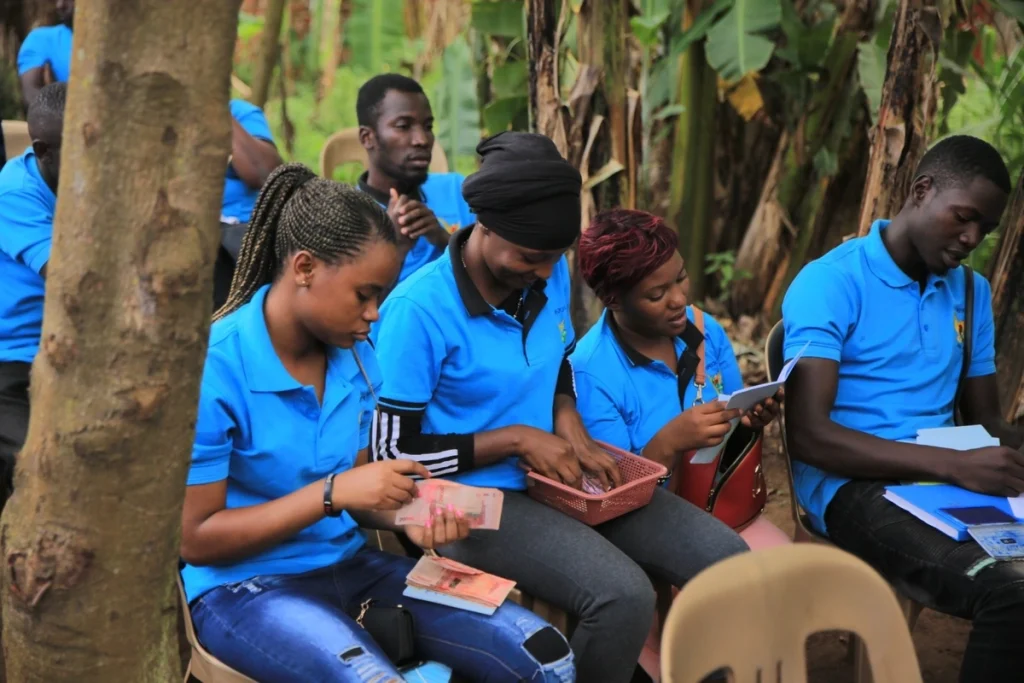
A key component of this work involves expanding access to finance and insurance, particularly for young farmers and women who are often excluded from formal financial systems. Without access to capital, it becomes nearly impossible to invest in improved seeds, mechanisation, or climate-smart technologies. By bridging this gap, the partnership is enabling farmers to move beyond subsistence and into commercially viable agriculture.
The Reality: A High-Potential Sector Facing Deep Constraints
Uganda’s agricultural sector is increasingly vulnerable to erratic weather patterns, including floods and prolonged droughts. Through the promotion of climate-smart agriculture, farmers are being equipped with techniques and tools to adapt to these changes while maintaining productivity.
At the same time, the integration of renewable energy solutions, such as solar-powered irrigation and processing systems, is improving efficiency and reducing reliance on costly or unreliable energy sources.
Equally important is the focus on enterprise development. Agriculture is being repositioned not just as a livelihood, but as a business opportunity. Young people are being supported to build agribusinesses across the value chain, from production and aggregation to logistics and value-added processing. This shift is already beginning to redefine how agriculture is perceived, moving it from an informal, low-income activity to a structured, scalable sector with real economic potential.
Women: The Backbone of Agriculture, Yet Underserved
Women remain central to this transformation. They contribute more than 70 per cent of agricultural labour in Uganda and dominate local food systems. Yet, they own less than 20 per cent of land and have limited access to financing and technology. This imbalance represents both a social and economic inefficiency. When women are empowered with equal access to resources, agricultural productivity increases, household incomes rise, and communities become more resilient. The partnership is actively working to close this gap by ensuring that women are not just participants, but leaders in the agrifood economy.
Heifer Uganda’s Model: Building Systems, Not Just Solutions
Heifer International’s implementation model reinforces this approach through community-led development. Rather than imposing external solutions, the model emphasises collective action, local ownership, and long-term sustainability. Farmers are organised into groups, supported with training and resources, and encouraged to build systems that can sustain themselves beyond the life of the program. This not only strengthens social capital but also ensures that progress is deeply rooted within communities.
The Rise of Youth-Led Agribusiness
The impact of this work is already visible in the growing number of youth-led agribusinesses emerging across Uganda. From digital platforms connecting farmers to markets, to innovative processing ventures and climate-smart farming solutions, a new generation is beginning to see agriculture as a viable and attractive career path. This shift is essential for a country where the majority of the population is under 30 and where job creation remains a pressing challenge.
A Path Forward: What Must Change
However, scaling this transformation will require more than partnerships alone. It will depend on coordinated action across policy, finance, and private sector engagement. Governments must create enabling environments through supportive policies and infrastructure investments.
Financial institutions need to design products that are accessible to women and young entrepreneurs. And private sector players must play a larger role in building efficient, market-driven value chains.
What is unfolding in Uganda is not just an agricultural reform; it is a structural redefinition of the sector. Through the collaboration between Mastercard Foundation and Heifer International, agriculture is being repositioned as a pathway to economic stability, a platform for innovation, and a catalyst for inclusive growth.
Most importantly, it is becoming a space where young people, especially women, can build meaningful, sustainable futures.
Uganda’s agrifood system stands at a pivotal moment. With the right investments and continued collaboration, it has the potential to feed millions, create jobs at scale, and drive long-term economic transformation. But perhaps the most significant shift is already underway: a new generation is stepping forward, not out of necessity, but with purpose, ready to redefine what agriculture can be, and what Africa’s future will look like.
About the Author