

In this story
For many Africans, accessing digital technology comes with an additional cost: a reliable internet connection. When data runs out or connectivity becomes unreliable, even simple tasks such as translating a document or understanding information in another language can become difficult.
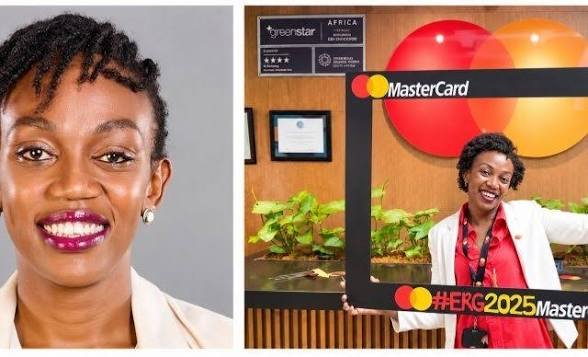
Kenyan developer Ruth Shallom wants to change that experience.She is the developer behind Lugha Desk, a free, open-source translation application designed to work without an internet connection once installed.
Built for Windows computers, the application supports translation between English and 19 African language options, including Kiswahili, Luganda, Kinyarwanda, Somali, Wolof and Yoruba.
Her idea challenges a familiar assumption in technology development that useful digital tools must always depend on being connected to the internet.
For Shallom, the connection required to download an application should be enough. After installation, users should be able to translate text directly on their computers, without worrying about whether their internet connection is still available.
“I built Lugha Desk because I wanted the connection you use to install the app to be enough. After that, the translation should happen on the laptop,” she explains.
It is a relatively simple idea, but one with important implications for people who regularly work with African languages in environments where internet access cannot always be guaranteed.
Building African-language technology beyond internet connectivity
Unlike many familiar online translation services, Lugha Desk does not require users to connect to the internet every time they need a translation.
The application comes with its translation model bundled into the Windows download.
Although this makes the installation package relatively large, at approximately 1.1GB, it eliminates the need for users to download a separate translation model after installation.
Once installed, the application loads the model directly from the computer and uses its processor to translate text.This means users can continue working even when their internet connection drops.
The approach also addresses another concern around digital privacy. Text entered into Lugha Desk remains on the user’s device during translation, rather than needing to be sent to an online translation service.
For Shallom, these decisions were central to how she wanted the application to work.The goal was not simply to develop another translation tool, but to create one that reflects the practical realities of its intended users.
Why African languages matter
Africa is home to thousands of languages, yet many digital tools still offer limited support for the continent’s linguistic diversity.
For people who communicate, learn and work in African languages, this can create barriers to accessing information and participating fully in the digital economy.
Lugha Desk takes a step towards addressing this gap by offering 19 language options supported by its underlying TranslatePsy-AfriSLM model, alongside English.
Some of the languages include Kiswahili, Luganda, Kinyarwanda, Somali, Wolof and Yoruba.However, Shallom is careful not to present the application’s language capabilities as a finished solution.
She describes the options as experimental because translation quality differs depending on the language and the sentence being translated.This distinction is important in a field where a translation can sound convincing while failing to preserve the original meaning.
Rather than claiming that the application has solved African-language translation, she is approaching its development through testing, identifying specific errors and making targeted improvements.
Tackling the accuracy challenge in African-language AI
One of the biggest challenges facing African-language technology is the availability of high-quality datasets.Machine translation systems depend on substantial amounts of reliable language data to understand vocabulary, grammar, sentence structure and cultural context.Where such resources are limited, translation accuracy can suffer.
Shallom says her work on Lugha Desk has included targeted fixes for specific phrases.For example, the application uses a small local dictionary to provide exact translations for selected Wolof and Luganda greetings.
Longer sentences and phrases outside those specific matches continue to be processed by the underlying translation model.It is a practical way of addressing known mistakes without suggesting that one small improvement automatically makes an entire language more accurately supported.
She also recognises the importance of involving fluent speakers in evaluating translations.A sentence may appear grammatically correct but still communicate something different from what the original speaker intended. Having people who understand the languages assess these results is therefore essential to improving the technology.
For Shallom, improving translation accuracy means identifying where meaning is lost, testing solutions and being transparent about the application’s limitations.
The technical work behind Lugha Desk
Developing an offline application comes with its own technical demands.One of Shallom’s biggest challenges was getting the complete software package, including the translation model, through Microsoft Store checks while keeping the installation process straightforward.
Bundling the model made the application significantly larger, but it also ensured that users would have everything needed to translate text after installation.This required balancing two competing priorities,a manageable installation experience and the ability to operate independently of an internet connection.
Lugha Desk is available through the Microsoft Store and is free and open source.
Although Google Translate remains a familiar alternative for many users, Lugha Desk focuses on a more specific use case,desktop translation on Windows computers, offline access and keeping entered text on the user’s device.
Its advantage will ultimately depend on how well it serves users within those conditions and how consistently its experimental language options perform.
Why African developers have a place in the global AI conversation
Shallom believes African developers can compete with global technology companies, particularly when they build solutions around problems they understand firsthand.
For her, unreliable internet connectivity was not an afterthought or a technical inconvenience. It was a design consideration from the beginning.That perspective highlights an important opportunity for African technology entrepreneurs.
Innovation does not always have to begin with developing a technology that competes directly with the world’s largest companies.It can also come from recognising overlooked problems and designing practical solutions for communities that mainstream products may not adequately serve.
However, she points to the shortage of quality African-language datasets and the difficulty of getting enough fluent speakers to evaluate translations as significant challenges.
These are issues that require broader collaboration between developers, language experts, researchers and communities.
A long-term commitment to making African-language technology better
Shallom is keeping Lugha Desk’s download figures, active user numbers and funding details private for now. Her stated business model is to keep the application free and open source.
Over the next five years, her priority is improving translation accuracy rather than simply expanding the application’s features.
She wants to identify translations that sound natural but alter the original meaning, correct what can be corrected and communicate honestly about areas where the technology still needs work.
That approach reflects a measured understanding of what it takes to build useful AI tools, particularly for languages that remain underserved by mainstream technology.
For African women entering technology and software development, her work also offers an important example of how innovation can begin with a problem close to home.
Lugha Desk is still evolving, and its experimental translations have limitations. But its underlying idea is significant,access to language technology should not depend entirely on access to the internet.
As Africa’s digital economy grows, developers who understand the continent’s linguistic diversity and everyday challenges will have an important role in shaping the technologies that serve its people.For Ruth Shallom, that work begins with making African-language translation possible even when the internet is not.