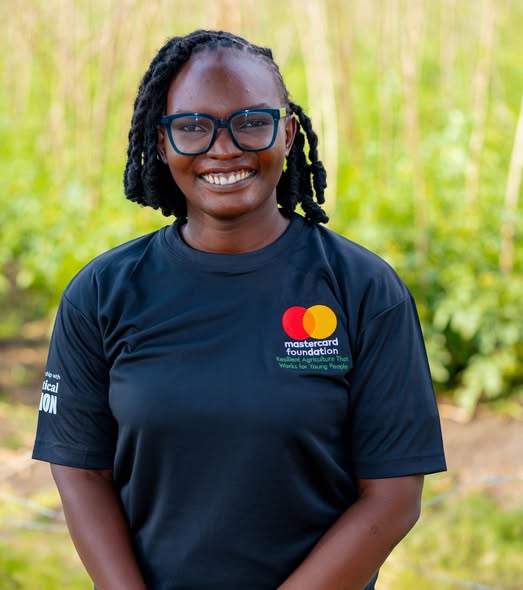
Meet Juliet Atieno Okoth, a 31-year-old agripreneur from Siaya County, whose inspiring journey in agriculture is a testament to resilience, innovation, and the power of youth empowerment.
After facing major setbacks ,losing leased farmland twice due to informal agreements , Juliet refused to give up on her dream. Her turning point came in 2023, when she joined the Resilient Agriculture that Works for Young People (RAY) Program, a transformative initiative by the Mastercard Foundation and Practical Action in Kenya.
Through RAY, Juliet gained vital knowledge and practical skills in formal land leasing, due diligence, agribusiness management, and enterprise planning. These lessons helped her turn previous challenges into opportunities. Today, she operates on a legally leased two-acre farm complete with modern irrigation infrastructure, where she grows tomatoes and anticipates her most productive harvest yet.
Beyond farming, the RAY program equipped Juliet with mentorship and business registration support, enabling her to access credit facilities and scale up her agribusiness. She now mentors 20 young men and women in her community, helping them navigate the agricultural value chain and build sustainable livelihoods.
Juliet’s agripreneurship doesn’t stop at tomatoes , she has diversified into kale production and black soldier fly (BSF) farming, producing sustainable, protein-rich poultry feeds that reduce feed costs and environmental impact.
“The new formal process of leasing land is key for any farmer who wants to practice large-scale production. I feel secure and confident this season,” she says proudly.
The RAY program is part of a wider effort to empower Africa’s rural youth through climate-resilient and market-driven agricultural solutions. It offers technical training, access to finance, digital tools, and mentorship to young people aged 18–35, ensuring they can participate meaningfully in building food-secure and sustainable rural economies.
By investing in enterprising young people like Juliet, RAY is helping to redefine agriculture , not just as a means of survival, but as a viable, dignified, and profitable career path for the next generation.
About the Author