
In this story
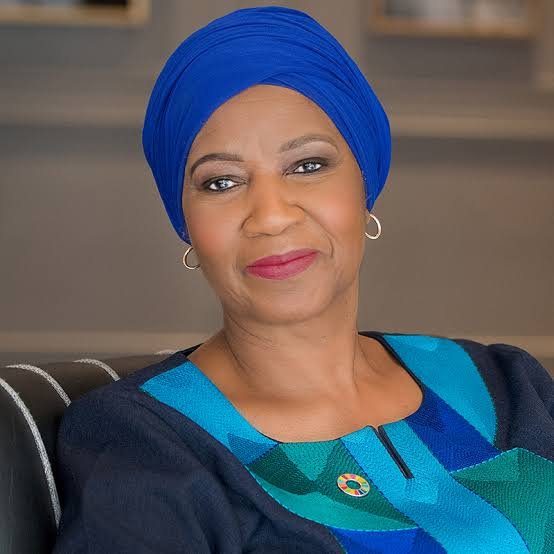
Dr Phumzile Mlambo-Ngcuka, South Africa’s first female Deputy President and former Executive Director of UN Women has died at the age of 71.
Her death was announced on Friday, November 20, 2026, prompting tributes from South African political leaders, the United Nations, the African Union and women’s rights organisations across the world.
According to South African authorities, Mlambo-Ngcuka died following complications from a recent medical procedure.
Her passing marks the end of a remarkable career that took her from the classroom and the anti-apartheid struggle to the highest levels of political leadership in South Africa and international diplomacy.
For millions of women, particularly across Africa, her story represents what is possible when education, determination, political courage and a commitment to social justice come together.
She did not simply occupy positions of influence. She used them to advance conversations about women’s participation in leadership, economic empowerment, education and the rights of women and girls.
From the classroom to the struggle for women’s right
Born on November 3, 1955, in Clermont, Durban, in South Africa’s KwaZulu-Natal province, Mlambo-Ngcuka’s journey into public leadership began with education.
She attended Ohlange High School before pursuing a Bachelor of Arts degree in Social Science and Education at the National University of Lesotho.
Her professional career began in education, working as a lecturer at Mpumalanga Teachers Training College before teaching at Ohlange High School between 1981 and 1983.
However, her ambitions extended beyond the classroom.
During the apartheid era, she became actively involved in the struggle for equality and political freedom. In 1983, she became the first president of the Natal Organisation of Women, an organisation affiliated with the United Democratic Front that mobilised women against apartheid and campaigned for their social, economic and political rights.
This experience helped shape her understanding of women’s liberation as an essential part of the wider struggle for democracy.
Her activism also took her beyond South Africa. She worked with the World Young Women’s Christian Association (World YWCA) in Geneva, Switzerland, where she coordinated programmes for young women and supported initiatives promoting opportunities for women across different regions.
She later directed the development organisation TEAM in Cape Town and worked with World University Service South Africa, supporting literacy, rural development and initiatives aimed at strengthening marginalised communities.
Her academic journey continued alongside her professional development. She obtained a qualification in Gender Policy and Planning from University College London, a Master of Philosophy in Educational Planning and Policy from the University of Cape Town, and a doctorate in Education and Technology from the University of Warwick in the United Kingdom.
Her career demonstrated an important connection between education, activism and public policy: lasting social change requires both an understanding of the challenges communities face and the ability to influence the institutions responsible for addressing them.
Breaking barriers in South African politics
When South Africa held its first democratic elections in 1994, following the end of apartheid, Mlambo-Ngcuka entered the country’s first democratic Parliament as a member of the African National Congress (ANC).
She became part of a new generation of leaders tasked with transforming the country’s political and economic institutions.
Her political career advanced through several important positions.
Between 1996 and 1999, she served as Deputy Minister of Trade and Industry, where she championed small and medium-sized enterprises and economic opportunities.
In 1999, she was appointed Minister of Minerals and Energy, a position she held until 2005.
Her tenure coincided with significant changes in South Africa’s mining industry. She played a role in advancing reforms intended to transform ownership and participation in the sector, including the Mineral and Petroleum Resources Development Act of 2002 and the country’s first Mining Charter.
She also advocated for greater participation by women in an industry historically dominated by men.
In 2005, she made history when she was appointed South Africa’s first female Deputy President, serving under President Thabo Mbeki until 2008.
Her appointment was a significant milestone in a country still navigating the inequalities inherited from apartheid.
As Deputy President, she oversaw programmes targeting poverty reduction, economic inclusion, education and women’s empowerment.
She also chaired the South African National AIDS Council during a critical period in the country’s HIV/AIDS response, helping strengthen cooperation between government, civil society, business and communities.
Her work demonstrated that women’s leadership should extend beyond representation into the development and implementation of policies that directly affect people’s lives.
Taking African women’s voices to the global stage at UN Women
One of the most defining chapters of her career began in August 2013 when she was appointed United Nations Under-Secretary-General and Executive Director of UN Women, the organisation responsible for advancing gender equality and the empowerment of women and girls globally.
She served two terms, remaining in office until August 2021.
Her appointment placed an African woman at the helm of a major international institution at a time when the world was intensifying its efforts to address gender inequality, violence against women and the underrepresentation of women in decision-making.
During her leadership, she championed several global initiatives and strengthened partnerships between governments, the private sector, civil society and women’s organisations.
Among the prominent initiatives associated with her tenure was the HeForShe movement, which encouraged men and boys to become active participants in the fight for gender equality.
Rather than treating women’s empowerment as an issue women should address alone, the campaign called for shared responsibility in challenging discrimination and unequal social structures.
She also helped advance the Generation Equality agenda, building momentum around commitments to accelerate gender equality and secure concrete action on women’s rights.
Her leadership placed particular emphasis on women’s economic empowerment, political participation, ending gender-based violence, girls’ education and the protection of women in conflict situations.
She consistently pushed governments and institutions to move beyond declarations of support for gender equality and commit resources, policies and measurable action.
Her influence extended to conflict resolution and peacebuilding.
In 2022, she contributed to the African Union-led mediation process that culminated in the Pretoria Agreement between the Ethiopian government and the Tigray People’s Liberation Front, demonstrating her continued commitment to women’s participation in peace and security efforts.
The African Union recognised her contribution as part of its tribute following her death.
Beyond political office: Building opportunities for future generations
Mlambo-Ngcuka’s commitment to education did not end when she left government.
She founded the Umlambo Foundation, an organisation focused on improving education, supporting teachers and strengthening leadership opportunities.
The foundation reflected a principle that had followed her throughout her career: empowering individuals requires investing in the systems that give them opportunities to succeed.
Her work also challenged the idea that leadership is measured only by the positions one occupies.
Through her involvement in education, development and women’s rights initiatives, she continued to advocate for opportunities that would benefit communities beyond her own political career.
Her achievements earned her international recognition, including honorary doctorates from several institutions and recognition for her contribution to human rights, equality and social justice.
What African women can learn from her journey
For African women navigating entrepreneurship, politics, journalism, academia, business and public service, Mlambo-Ngcuka’s life offers lessons that go beyond her impressive list of appointments.
-Your starting point does not determine your destination.
She began her professional life as a teacher. Through education, activism, public service and international engagement, she developed a career that eventually placed her among the world’s most influential women leaders.
Her journey reminds young African women that careers can evolve and that opportunities can emerge from seemingly ordinary beginnings.
-Education is an investment in leadership.
Her commitment to academic development continued even as she assumed increasingly demanding responsibilities.
She demonstrated that learning should not stop when someone secures a job, enters politics or achieves professional recognition.
For women seeking leadership opportunities, continuous learning, expertise and professional development remain important tools.
-Do not wait for permission to occupy leadership spaces.
Becoming South Africa’s first female Deputy President was a historic achievement in a political environment where women had long faced barriers to power.
Her career reminds women that representation matters, but they must also be prepared to take responsibility, influence decisions and challenge systems that exclude them.
A legacy that will continue to inspire African women
Tributes following her death have reflected the breadth of her influence.
South African President Cyril Ramaphosa described her as a dynamic woman leader who championed women not only in South Africa and Africa but across the world.
United Nations Secretary-General António Guterres remembered her as a lifelong champion of women’s and girls’ rights and empowerment.
UN Deputy Secretary-General Amina Mohammed also praised her interventions on behalf of women and girls in conflict-affected countries, recalling her determination to push boundaries in advancing women’s leadership.
The African Union similarly recognised her contribution to women’s representation in political leadership, peace negotiations and post-conflict recovery.
Her death also comes at a time when African countries continue to grapple with persistent gender inequalities, gender-based violence, limited access to economic opportunities and the underrepresentation of women in senior decision-making positions.
For African Women Network, her life offers a powerful reminder that the advancement of women requires more than celebrating individual success stories. It requires building institutions, challenging inequality, supporting emerging leaders and ensuring that women have the power to shape the decisions affecting their lives.
Phumzile Mlambo-Ngcuka crossed boundaries that had historically limited women’s participation in politics and global governance. She moved from the classroom to national government and ultimately to the international stage, carrying the concerns of women and girls into spaces where decisions about their futures were made.
Her legacy is not simply that she became the first woman to hold one of South Africa’s highest political offices. It is that she helped make women’s leadership, equality and dignity part of the global conversation.
She broke barriers, built platforms and carried African women’s voices into rooms where the future of millions was being decided. Her work leaves the next generation with the responsibility to continue the journey.