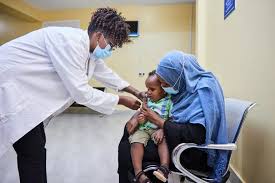
Trans Mara East Sub-County has launched a major mass vaccination campaign targeting more than 76,000 children, in an effort to curb the rising threat of typhoid and measles-rubella (MR) infections.
The campaign, running from July 4 to July 14, aims to vaccinate 56,774 children against typhoid and 18,920 children against measles-rubella, according to county health officials.
Richard Rotich, the Sub-County Expanded Programme on Immunisation (EPI) Coordinator, confirmed that comprehensive preparations have been finalized. “All 24 designated vaccination centres are fully equipped, and health personnel have undergone training to ensure safe and effective vaccine delivery,” he said.
Rotich underscored the urgency of the campaign, particularly in the wake of growing antimicrobial resistance to typhoid treatments.
“Typhoid remains a serious public health threat, especially for children under 15 years ,more so those under the age of five. With rising drug resistance, vaccination is no longer optional; it’s essential,” he stated, urging parents and guardians to take their children for the free immunization services.
The typhoid vaccine being administered is part of a nationwide effort to address drug-resistant strains that have become increasingly difficult and costly to treat.
The campaign also includes the measles-rubella (MR) vaccine in response to a concerning rise in outbreaks across the region. According to the Ministry of Health, 18 countries have reported measles cases in the past year, with 2,949 confirmed infections and 18 deaths between January 2024 and February 2025.
Kenya’s Health Cabinet Secretary Adan Duale emphasized the critical need for renewed vaccination efforts. “Both typhoid and measles are preventable diseases. We must not wait for outbreaks to act,” he said, calling on local leaders and caregivers to support the immunization drive.
Kenya’s measles vaccination coverage remains below recommended levels. As of early 2025, first-dose (MR1) coverage is at 80%, while second-dose (MR2) coverage has dropped to just 60%, far short of the World Health Organization’s recommended 95% for herd immunity.
The gap in coverage has left a growing number of children at risk. Since the last national measles-rubella campaign conducted in 2016, an estimated 6.1 million children have not received the second dose, increasing the likelihood of large-scale outbreaks.
The Ministry of Health, in partnership with local authorities and development partners, has rolled out a public awareness campaign using community health workers, local media, and schools to encourage vaccine uptake.
Health officials are also urging parents to bring child health cards during the campaign to ensure accurate record-keeping and follow-up.
This mass vaccination drive reflects the government’s broader efforts to strengthen public health infrastructure and reduce child mortality from vaccine-preventable diseases, especially in underserved regions like Trans Mara East..
About the Author