For millions of Black women, braiding is more than a hairstyle,it’s a cultural tradition, a form of self-expression, and a protective style passed down through generations. Yet despite its significance, the braiding process has remained largely unchanged for centuries, often requiring clients to spend long hours in salon chairs while stylists endure repetitive strain on their hands, wrists, backs, and shoulders.
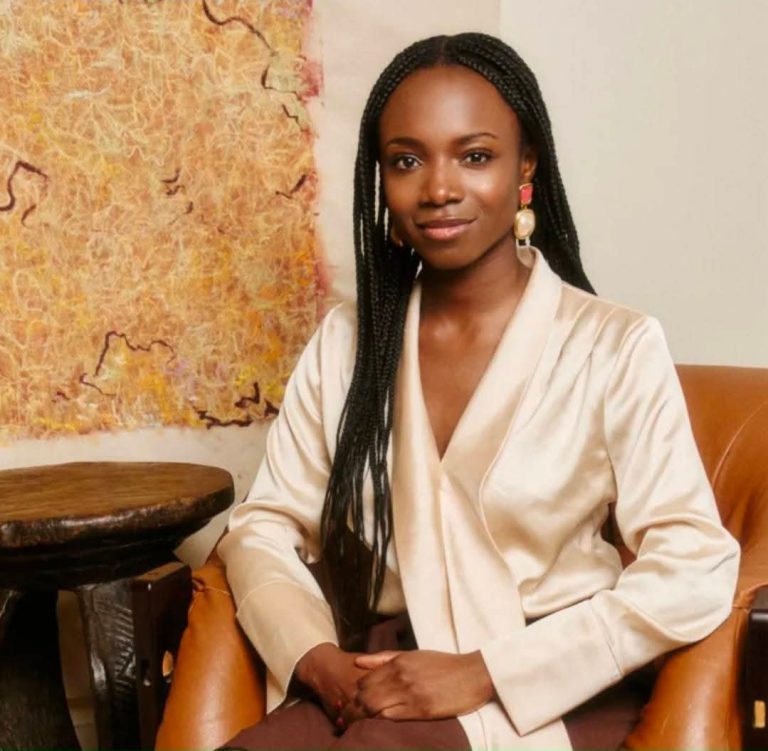
Determined to change that, Yinka Ogunbiyi, a Nigerian-American biomechanical engineer, entrepreneur, and inventor, has developed HaloBraid, the world’s first patented braid-assist robot designed to reduce braiding time while supporting,not replacing,professional hairstylists.
Her groundbreaking innovation has already attracted $7 million in seed funding, positioning HaloBraid as one of the most exciting beauty technology startups transforming the textured hair industry.
From Harvard Engineer to Beauty Tech Innovator
Born in London to Nigerian roots, Yinka Ogunbiyi studied engineering at Harvard University before completing a joint MS/MBA through Harvard Engineering School and Harvard Business School.
Her career has always centered on solving real-world problems through technology. Before founding HaloBraid, she spent four years building smart cooking appliances, helping develop innovative connected barbecue smokers, indoor grills, and kitchen technology. She also worked as a chef and recipe developer, demonstrating her passion for combining engineering with everyday experiences.
Today, she is applying that same innovative mindset to an industry deeply connected to Black culture.
The Inspiration Behind HaloBraid
The idea for HaloBraid emerged during the COVID-19 pandemic.
Unable to visit a salon, Ogunbiyi attempted to install her own knotless braids at home. The process took four exhausting days.
Instead of accepting the challenge as unavoidable, she asked herself a simple question:
“Where is the device that makes this faster?”
When she discovered that no such technology existed, she decided to build it herself.
Working alongside co-founder David Afolabi, Ogunbiyi spent four years researching the problem. Together, they interviewed more than 200 professional braiders, surveyed over 2,200 braid wearers, and built more than 600 prototypes before creating HaloBraid.
Their innovation also won Harvard University’s President’s Innovation Challenge, earning early funding that helped validate the technology before attracting millions in venture capital investment.
Raising $7 Million to Transform Hair Braiding
In June 2026, HaloBraid announced $7 million in seed funding led by Seven Seven Six, the venture capital firm founded by Alexis Ohanian, with participation from AlleyCorp and Bling Capital.
The investment will support product development and prepare HaloBraid for its commercial rollout through salon partnerships.
The company already reports that more than 7,000 salons have joined its waiting list, highlighting the strong demand for technology that can improve efficiency without sacrificing artistry.
How HaloBraid Works
Rather than replacing hairstylists, HaloBraid is designed to work alongside them.
Stylists begin each braid manually by sectioning the hair and creating the foundation. HaloBraid then completes the repetitive braiding motion before the stylist finishes the braid.
The result is a faster service while allowing braiders to maintain full creative control over the hairstyle.
According to Ogunbiyi, the technology aims to cut knotless braid appointments roughly in half.
Protecting the Health of Hairstylists
One of HaloBraid’s biggest goals is improving the wellbeing of professional braiders.
Years of repetitive hand movements leave many stylists suffering from conditions including carpal tunnel syndrome, arthritis, chronic wrist pain, and back injuries.
Some stylists shared deeply personal stories with Ogunbiyi, including one who struggled to hold her newborn baby after spending long days braiding clients because her hands were in constant pain.
HaloBraid seeks to reduce this physical strain while enabling stylists to serve more clients without compromising their health.
Giving Black Women Back Their Time
Research conducted by HaloBraid estimates that Black women collectively spend billions of hours in salon chairs every year.
Ogunbiyi believes technology can change that.
“Braiding is more popular than ever, but the way we braid hasn’t changed. It’s still time-consuming and painful for stylists and clients alike,” she says.
The company’s research found that 95% of respondents said they would braid their hair more often if appointments took less time.
For Ogunbiyi, the mission goes beyond convenience.
She believes every hour saved represents more time for families, careers, education, entrepreneurship, and personal wellbeing.
Preserving Culture Through Innovation
As artificial intelligence and automation reshape industries around the world, Ogunbiyi is clear that HaloBraid was never designed to replace human creativity.
Instead, it exists to preserve and strengthen the braiding profession.
Braiders remain at the center of the service, while technology simply assists with the repetitive movements that consume the most time and place the greatest strain on the body.
“I don’t think anything will get lost from the experience,” she explains. “If anything, it enriches it.”
Building the Future of Beauty Technology
HaloBraid represents more than a technological breakthrough,it is a powerful example of African innovation solving problems rooted in culture and community.
By combining engineering, artificial intelligence, robotics, and entrepreneurship, Yinka Ogunbiyi is helping modernize one of the world’s oldest hairstyling traditions while protecting the people who keep that tradition alive.
Her journey demonstrates how innovation can honour heritage rather than replace it.
As HaloBraid prepares for its commercial launch, Ogunbiyi is proving that the future of beauty technology can be inclusive, culturally informed, and designed with Black women at its heart.
About the Author