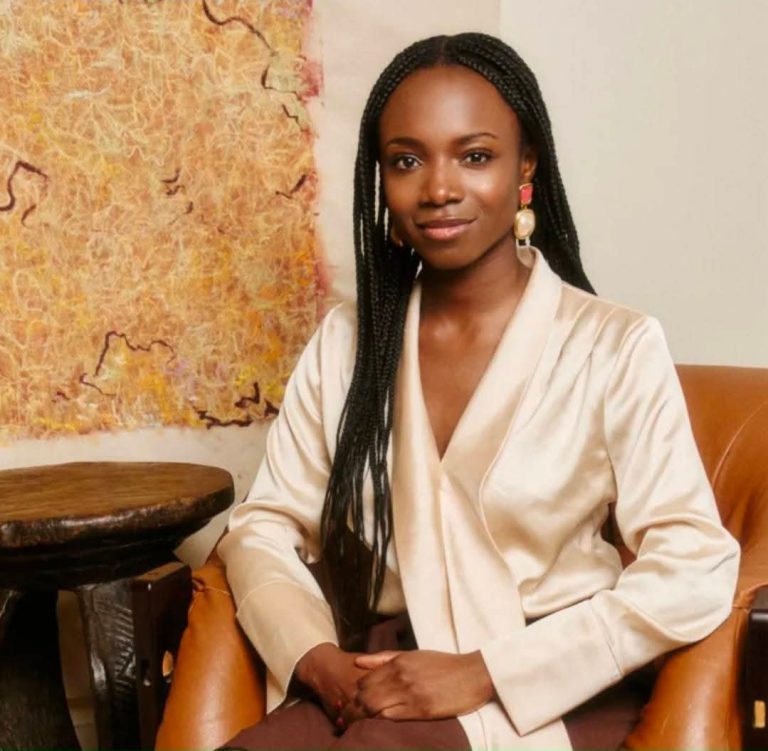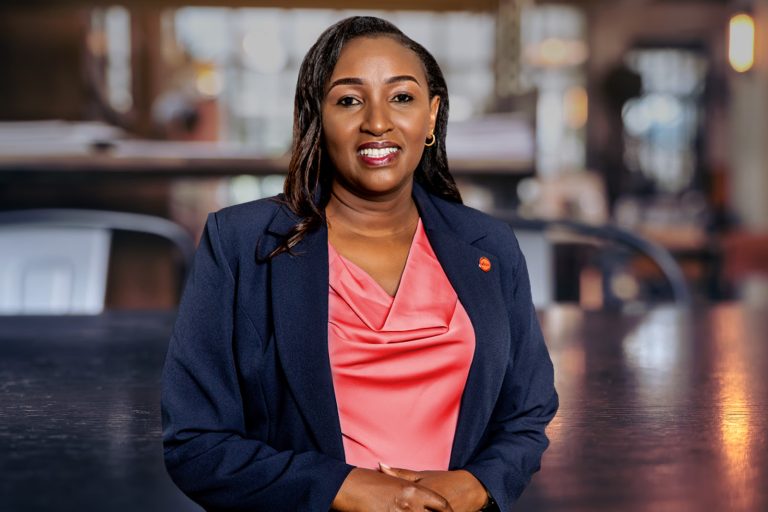

For Grace Kossia, education was more than a pathway to success,it was a lifeline.After fleeing the civil war in the Democratic Republic of the Congo as a child, Grace rebuilt her life in the United States.
According Grace,adjusting to a new culture and language was challenging, but compassionate teachers saw her potential long before she saw it herself. Their belief transformed her future and inspired a lifelong mission: to help others discover their own potential.
Today, Grace is one of the rising African women leading innovation in artificial intelligence and education. As an AI Innovation Specialist at Arizona State University, she is helping shape how universities responsibly adopt AI to improve learning while ensuring technology remains centered on people.
From Refugee to Harvard Graduate
Grace’s passion for learning began with curiosity. As a child, she loved taking apart broken household devices and was fascinated by the technology her teachers used in classrooms,from chalkboards to smart boards.
Determined to combine education with engineering, she enrolled at Harvard University, earning a Bachelor’s degree in Mechanical Engineering before completing a Master’s in Teacher Education at the Harvard Graduate School of Education.
She credits engineering with teaching her systems-thinking approach,an ability to test ideas, learn from failures, and continually improve solutions.
A Teacher First
Before becoming an AI specialist, Grace spent years teaching physics in New York City and Texas.
Those classroom experiences shaped her belief that every learner deserves encouragement, belonging, and opportunities to thrive.
Later, she joined educational technology organizations where she helped create engaging mathematics resources that reached more than 2 million learners, making complex concepts easier to understand for students from underserved communities.
Leading Responsible AI at Arizona State University
Grace now serves on Arizona State University’s AI Acceleration Team, where she helps faculty, students, and staff integrate artificial intelligence into teaching, research, and university operations.
Rather than viewing AI as a replacement for human creativity, she believes it should serve as a collaborative thinking partner that expands what people can achieve.
Her work includes:
• Designing AI-powered learning solutions.
• Managing applied AI internship programs.
• Improving AI tools through user feedback.
• Supporting responsible and ethical AI adoption.
• Helping educators confidently embrace emerging technologies.
Grace also contributed to the Mastercard Foundation AI Youth Fellowship, mentoring young innovators and helping them overcome imposter syndrome while building enterprise-ready AI solutions.
Putting People Before Technology
Despite working with cutting-edge AI every day, Grace remains convinced that technology’s greatest strength is its ability to strengthen human connection,not replace it.
Her leadership philosophy is rooted in compassion, collaboration, and creating environments where people feel seen, supported, and empowered.
“Technology is most powerful when it helps people build, create, and connect,” is the principle that continues to guide her work.
Inspiring African Girls in STEM
Grace Kossia’s journey,from a young refugee inspired by dedicated teachers to a Harvard graduate and AI leader,is a powerful reminder that opportunity, mentorship, and education can change lives.
As conversations around artificial intelligence continue to shape the future of work and education, Grace is ensuring African voices, women, and young innovators are part of that future.
Her story stands as an inspiration to girls across Africa who dream of careers in science, technology, engineering, and mathematics (STEM), proving that resilience, education, and purpose can transform adversity into global impact.
About Grace Kossia
Grace Kossia was born in the Democratic Republic of the Congo before her family fled the country’s civil conflict and resettled in the United States as refugees. Inspired by the teachers who helped her overcome the challenges of adapting to a new culture and language, she dedicated her career to transforming education through innovation and compassion.
A graduate of Harvard University, Grace earned a bachelor’s degree in Mechanical Engineering before completing a Master’s in Teacher Education at the Harvard Graduate School of Education. She began her professional journey as a physics teacher, where she nurtured students’ curiosity and confidence in science.
Today, Grace serves as an AI Innovation Specialist at Arizona State University, where she leads initiatives that promote the responsible and ethical use of artificial intelligence in education. Passionate about human-centered technology, she champions inclusive learning environments and believes AI should empower people, strengthen human connections, and expand opportunities for learners from all backgrounds.
About the Author