From Liberia to Germany, the only women to lead the UN General Assembly offer powerful lessons in leadership, resilience, and representation
In a world grappling with conflict, climate change, economic inequality, and humanitarian crises, diplomacy has never been more important. Yet despite decades of progress, women remain underrepresented in many of the spaces where global decisions are made.
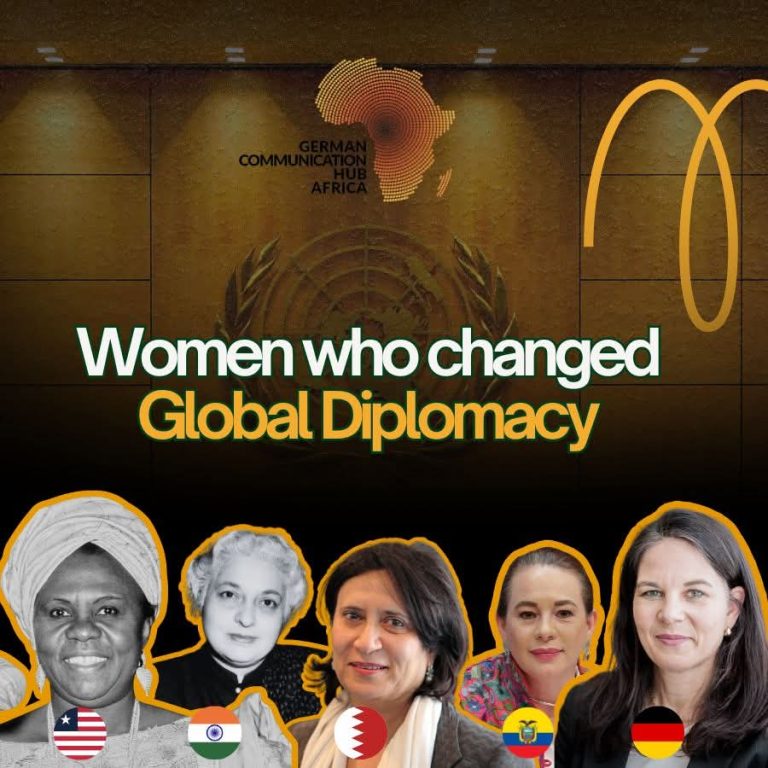
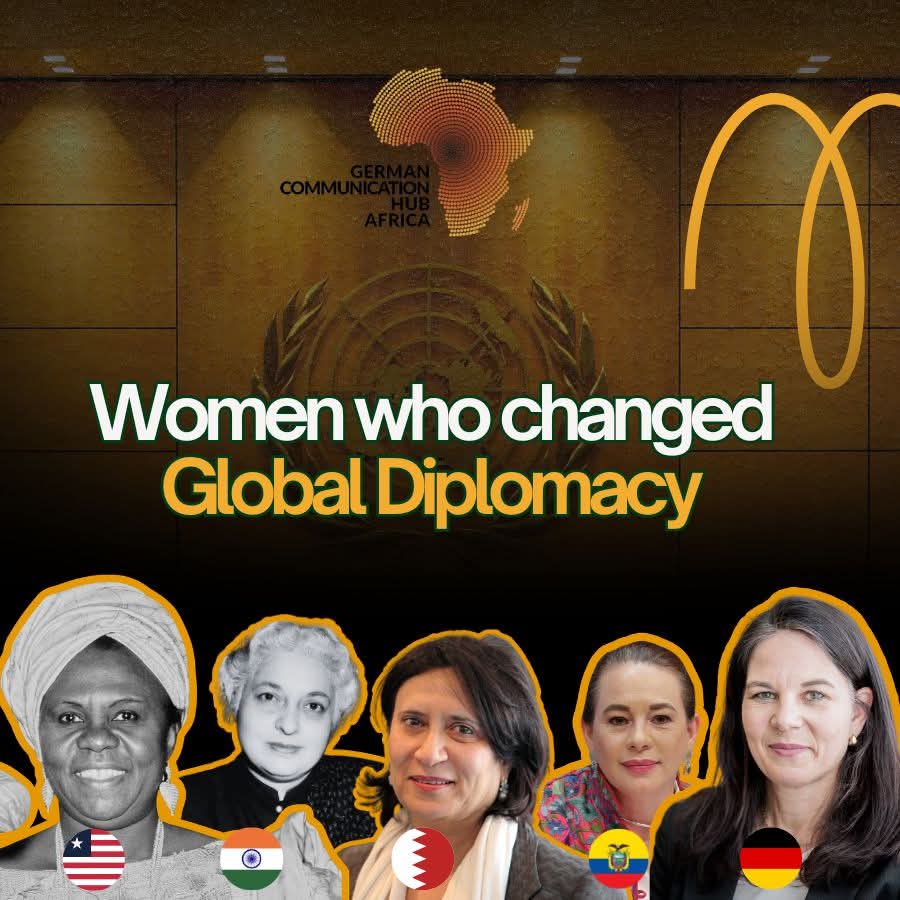
One striking example is the history of the United Nations General Assembly. Since its establishment in 1945, only five women have served as President of the Assembly—the United Nations’ most representative decision-making body, where all member states come together to address global challenges.
Their stories are not merely milestones in history. They are powerful reminders of what women bring to leadership, diplomacy, and international cooperation. From Asia to Africa, the Middle East, Europe, and Latin America, these trailblazers broke barriers, challenged stereotypes, and helped shape conversations that affected millions of people around the world.
As the world marks the International Day of Women in Diplomacy, their journeys offer valuable lessons for the next generation of African women leaders.
Breaking Barriers on the Global Stage
The first woman to lead the General Assembly was Vijaya Lakshmi Pandit of India in 1953. At a time when women were rarely seen in positions of international authority, her election marked a historic breakthrough.
A respected diplomat and advocate for independence and human rights, Pandit demonstrated that women could lead complex global conversations with confidence and competence. Her appointment opened doors that had long been closed to women in international affairs.
Sixteen years later, another history-making woman took the helm.
Africa’s Diplomatic Pioneer
In 1969, Liberia’s Angie Elisabeth Brooks became the second woman and the first African woman,to preside over the General Assembly.
Her election was a landmark moment not only for Africa but for women across the developing world. Brooks rose through the ranks of diplomacy during a period when both African nations and women were fighting for greater representation in international institutions.
Her leadership demonstrated that African women belonged at the highest levels of global governance. More than five decades later, her achievement continues to inspire women seeking to influence policy and decision-making beyond national borders.
Leading Through Dialogue and Consensus
The third woman to lead the Assembly was Bahrain’s Sheikha Haya Rashed Al Khalifa.
As an accomplished lawyer and diplomat, she brought a strong focus on dialogue, cooperation, and consensus-building. Her tenure highlighted one of diplomacy’s most essential skills: the ability to bring diverse perspectives together in pursuit of common goals.
In an increasingly polarized world, her leadership underscored the importance of listening, negotiation, and collaboration,qualities often overlooked but critical for effective leadership.
Championing Inclusive Leadership
In 2018, Ecuador’s María Fernanda Espinosa became the fourth woman to assume the role.
A diplomat, politician, and advocate for sustainable development, Espinosa used her platform to champion gender equality, environmental protection, and multilateral cooperation.
Her leadership reflected a broader understanding of diplomacy,one that recognizes the interconnected nature of global challenges and the need for inclusive solutions. She demonstrated that leadership is not simply about holding power but about using influence to elevate critical issues and bring diverse voices into the conversation.
A New Generation of Women Leaders
The fifth woman to assume the presidency of the General Assembly is Germany’s Annalena Baerbock.
Known internationally for her work in foreign policy and international cooperation, Baerbock represents a new generation of women leaders navigating an increasingly complex geopolitical landscape.
Her rise reflects the growing recognition that diverse leadership strengthens institutions and improves decision-making. It also highlights the importance of expertise, preparation, and resilience in building a successful diplomatic career.
What African Women Can Learn from Their Journeys
Although these women come from different regions, cultures, and political backgrounds, their stories share common themes that resonate far beyond diplomacy.
First, representation matters. When women occupy leadership positions, they expand opportunities and inspire future generations to pursue ambitious goals.
Second, expertise creates influence. Each of these leaders built careers grounded in knowledge, experience, and a commitment to public service.
Third, leadership is about building bridges. Effective diplomacy requires empathy, communication, and the ability to unite people around shared objectives.
Finally, courage opens doors. Every one of these women stepped into spaces where few women had gone before, proving that barriers can be challenged and transformed.
The Future of Diplomacy Must Include Women
The fact that only five women have led the United Nations General Assembly in eighty years reveals how much work remains to achieve gender parity in global leadership.
Yet their achievements also demonstrate what is possible when women are given the opportunity to lead.
For African women aspiring to careers in diplomacy, international development, public policy, governance, and global affairs, these pioneers offer a compelling message: leadership has no gender, and the world benefits when women’s voices help shape its future.
As global challenges become more interconnected and complex, the need for inclusive leadership is greater than ever. The future of diplomacy will not be defined solely by who occupies a seat at the table, but by whose perspectives, experiences, and ideas help shape the decisions that affect us all.
And that future must include more women.
About the Author