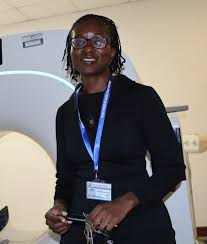
Connie Ongeti, a senior radiologist at Jaramogi Oginga Odinga Teaching and Referral Hospital (JOOTRH), has secured a global research grant to address a critical gap in sickle cell care, where stroke remains a leading cause of disability and death among children.
The grant, secured from the Royal Society of Tropical Medicine and Hygiene, will support her study titled “Feasibility of Stroke Prevention through Routine Point-of-Care Transcranial Doppler (TCD) for Children with Sickle Cell Disease in Low-Resource Settings,” to be conducted at Jaramogi Oginga Odinga Teaching and Referral Hospital (JOOTRH).
Dr. Ongeti noted that her work is driven by firsthand experience with the devastating impact of stroke on patients and a desire to contribute to prevention efforts through radiology.
While Transcranial Doppler (TCD) ultrasound is routinely used in developed countries to identify children at risk and guide preventive care, access remains limited in many low-resource settings.
Her study will assess barriers to screening and explore the use of portable point-of-care devices to expand access across Kenya.
The project brings together key collaborators, including paediatrician Dr Joy Muyonga and Dr. Dickens Onyango from the Kisumu County Department of Health, with the aim of developing a scalable and sustainable model for stroke prevention across Africa.
This achievement also reflects ongoing efforts by JOOTRH’s Department of Research and Training to strengthen staff capacity in research and grant acquisition. Former Director Dr. Mitchel Okumu underscored the role of mentorship in supporting such success.
With over 3,500 applications submitted globally to RSTMH in 2025, Dr. Ongeti’s selection highlights both her individual excellence and the growing research capacity at JOOTRH, positioning the institution as an emerging hub for specialised care and medical innovation.
She earned the highly competitive award on her first attempt, emerging among a select group of successful applicants from Kenya in a global pool.
Her achievement not only elevates Kenya’s profile in global health research but also underscores the critical role African women are playing in advancing innovative, life-saving solutions.
For young women pursuing careers in medicine and science, her story stands as both inspiration and proof of what is possible.
Through her research, she is not only advancing stroke prevention for children with sickle cell disease but also helping shape a future where life-saving diagnostics are accessible to all, regardless of geography or resources.
About the Author