
In this story
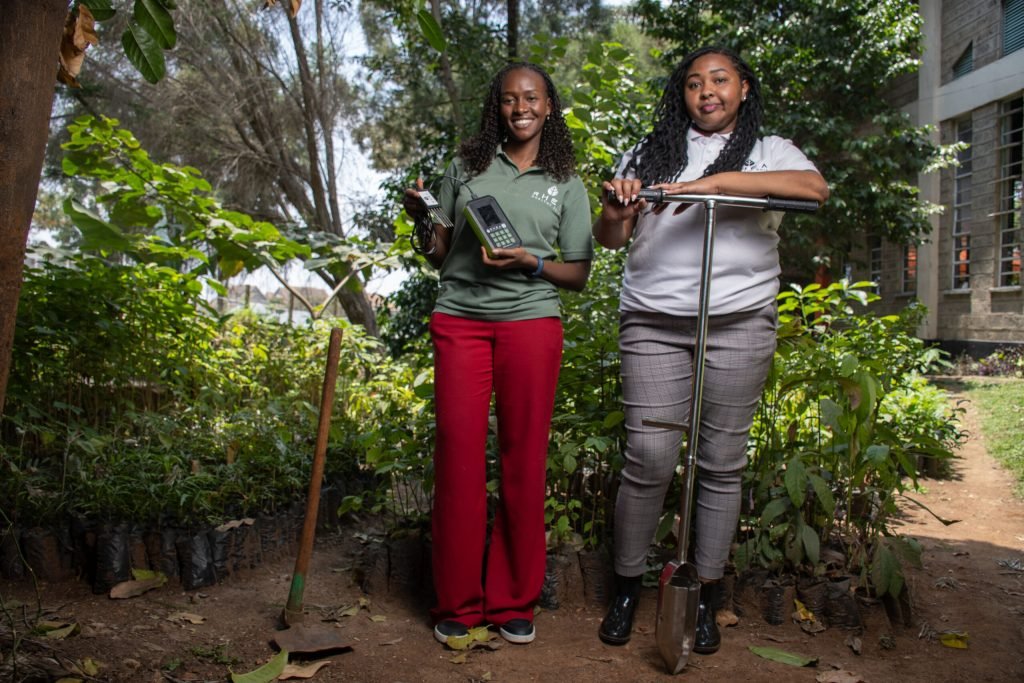
When Priscilla Wakerera and Soinato Leboo founded Rhea in 2022, they chose to build a business around something farmers cannot afford to ignore , the soil beneath their feet.
Four years later, their Kenyan agritech startup has secured $100,000 to take its soil-intelligence technology into more farms and expand into Tanzania.
For many farmers, soil is where every farming decision begins.
What nutrients are available? What does the crop need? How much fertiliser should be applied? And, ultimately, will the investment in inputs translate into a better harvest?
Yet getting reliable answers is not always easy, particularly for smallholder farmers.
This is the gap that Wakerera and Leboo are trying to address through Rhea Soil Health Management, a women-led Kenyan agritech company developing technology to make soil testing and agricultural recommendations more accessible.
The startup has now received a $100,000 investment from Obudu Capital through a convertible note. The funding will support the commercialisation of its RHEA AgriPad, deployment of 100 devices, reaching 5,000 farmers and expansion into Tanzania.
Building a business around soil
Agriculture remains central to livelihoods across Africa, but farmers often make important decisions without timely information about the condition of their soil.
Fertiliser is one of the major variable costs in farming. Using too little can affect crop performance, while using too much can increase costs without necessarily improving production.
Traditional soil testing can also be difficult for smallholder farmers to access. Soil samples may need to be collected, transported to laboratories and processed before farmers receive results.
Rhea is trying to bring more of that process closer to the farmer.
Its flagship RHEA AgriPad is a portable soil-testing device that combines sensor technology, software and machine learning to collect soil information and support fertiliser and soil-management decisions.
The company also uses digital platforms, including WhatsApp, to provide farmers with information and agronomic advice.
The goal is not simply to give farmers a soil report, but to connect the information from the soil to the decisions they make on the farm.
Two women navigating Kenya’s agritech space
For Wakerera and Leboo, building Rhea has meant developing technology while also understanding the realities of the farmers they want to serve.
Wakerera has previously said the company went through three prototypes over almost two years as the founders worked with farmers to understand their needs and affordability constraints.
That experience has shaped the company’s approach.
Rather than relying solely on technology, Rhea is building a network of agronomists who can work closer to farmers.
During the first half of 2026, the company said it recruited and trained 135 agronomist agents across Makueni, Taita Taveta and Kajiado.
It also launched the Rhea Agent App to support field operations and introduced Rhea Optima, targeting medium and large-scale farmers, agronomists and laboratories.
The model combines technology with human expertise: the device collects soil information, the software processes it, while agronomists help farmers understand what the results mean for their particular crops and fields.
For Rhea, that human connection could be just as important as the technology itself.
Why the soil data could become valuable
The AgriPad is only one part of Rhea’s bigger vision.
As more farmers use the technology, the company could build a growing database of information about soil conditions, nutrient requirements and agricultural patterns across different regions.
That data could eventually have applications beyond farming decisions.
Rhea has identified potential opportunities in agricultural finance, insurance and carbon markets, although these applications would require appropriate verification, commercial partnerships and regulatory frameworks.
For financial institutions, better information about farms could help assess agricultural risk.
For insurers, it could provide additional information about farms and potential losses.
For agricultural programmes, soil data could help measure whether interventions are producing results.
This creates the possibility of a business that goes beyond selling soil-testing technology.
A growing opportunity for women in climate technology
Rhea’s story also reflects the expanding space for African women to build businesses around climate and environmental challenges.
Climate technology in Africa has attracted growing investment in recent years.
The sector covers much more than agriculture, with businesses working in areas including energy, water, transport, waste management and environmental sustainability.
For women entrepreneurs, this creates opportunities to develop technology around problems affecting communities across the continent.
Wakerera and Leboo are building their company in one of those spaces — where agriculture, climate resilience and technology meet.
The $100,000 comes with expectations
The latest investment gives Rhea additional capital, but it also puts the company’s business model to a bigger test.
The targets attached to the funding are specific: 100 devices, 5,000 farmers and expansion into Tanzania.
The startup has previously received $75,000 through Village Capital’s programme backed by Standard Chartered’s Women in Tech initiative.
Now, the question is whether Rhea can turn its technology into a sustainable business at scale.
For smallholder farmers, the cost of any new technology matters.
A farmer considering soil testing must weigh that expense against the cost of seed, fertiliser, labour, transport and other farm needs.
That means Rhea will ultimately need to demonstrate that its technology creates measurable value — whether through better fertiliser decisions, improved yields, reduced input costs or more efficient farm management.
Tanzania becomes the next test
Expansion into Tanzania will give Rhea an opportunity to test whether the model it has developed in Kenya can work across borders.
East Africa has millions of smallholder farmers, creating a potentially large market for agricultural information and technology.
But different countries also have different soil conditions, crops, farming practices, regulations and agricultural support systems.
Rhea will therefore need to adapt its model while maintaining the technology’s usefulness to farmers in different markets.
The company has also been developing intellectual property around its technology.
A 2025 patent application published by the Kenya Industrial Property Institute describes a handheld soil-testing kit and system designed to collect soil nutritional data, incorporate GPS connectivity and transmit information to a web-based fertiliser recommendation system.
What comes next for Rhea?
For Wakerera and Leboo, the next chapter is no longer simply about proving that their technology works.
It is about proving that farmers will use it, pay for it and benefit from it at scale.
The company’s immediate targets — commercialising the AgriPad, deploying 100 devices, reaching 5,000 farmers and entering Tanzania — will provide a clearer measure of its progress.
If successful, Rhea could build more than a soil-testing business. Its growing database could eventually become a valuable agricultural information resource for farmers, agribusinesses, financial institutions, insurers and other players in the agricultural ecosystem.
For now, the story of Rhea is also the story of two Kenyan women choosing to build technology around a problem that is fundamental to Africa’s food systems.
Their bet is simple: better information about the soil can lead to better decisions on the farm.
With $100,000 in fresh funding and Tanzania on its expansion roadmap, Rhea is now putting that idea to a much bigger test across East Africa.